
Overview
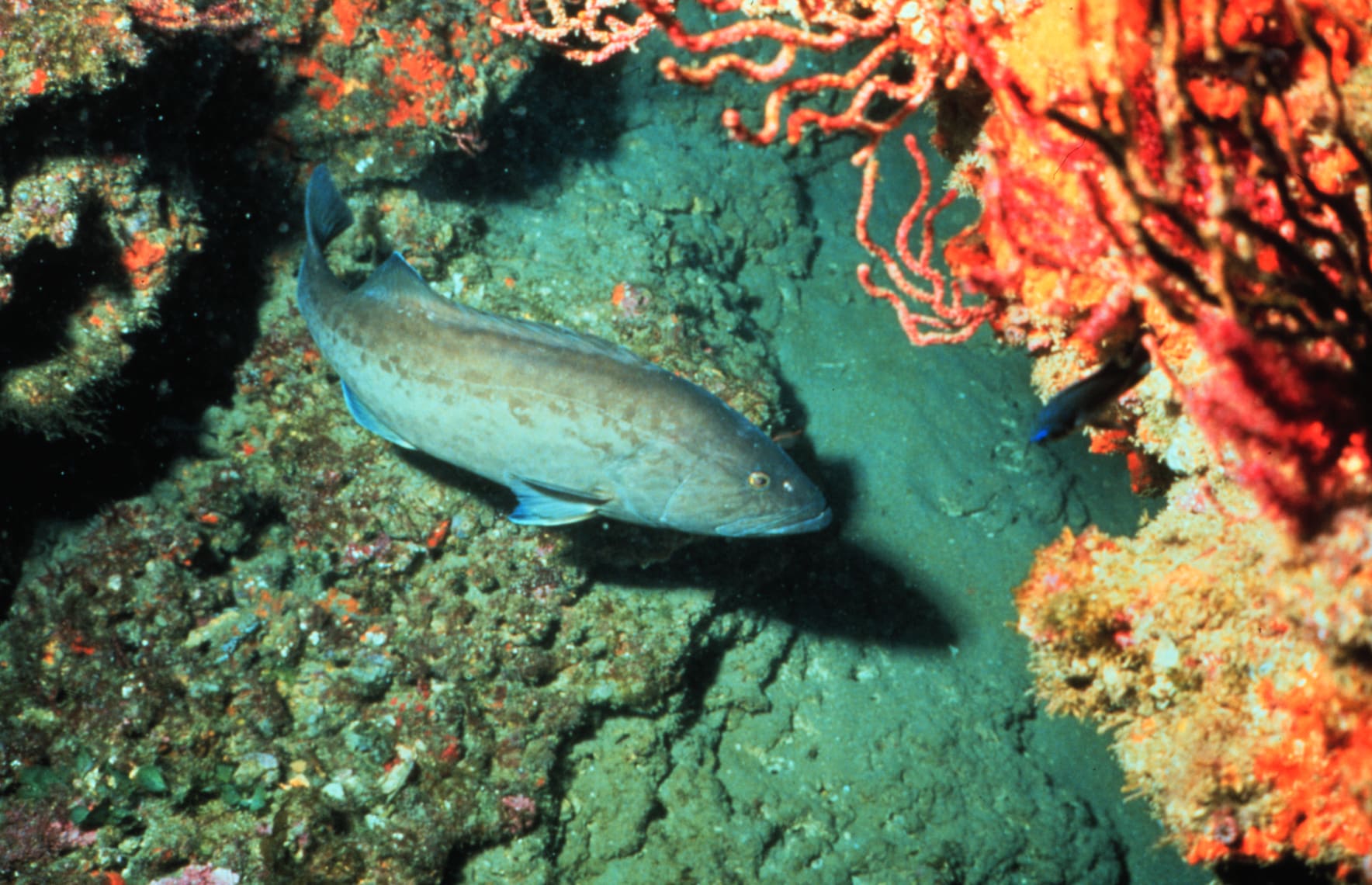
The coloration is extremely variable but generally brownish gray overall with a pattern of dark, worm-like or kiss-shaped markings along the sides. Gags can be distinguished from black grouper, Mycteroperca bonaci, that often occur in the same habitat by the distinctive color pattern and the shape of the preopercle. It also has a noticeably notched preopercle (the middle bone of the gill cover) with a distinct lobed appearance, while Black Grouper, have an evenly rounded preopercle with no definite lobe below. Spawning aggregations of gags in the Middle Grounds of the Gulf of Mexico from January through March. Young gags are predominantly female, transforming into males, as they grow larger.
Taxonomy
- Kingdom
- Animalia
- Phylum
- Chordata
- Class
- Actinopterygii
- Order
- Scorpaeniformes
- Family
- Serranidae
- Genus
- Mycteroperca
- Species
- microlepis
Habitat
Gags are the most common grouper on rocky ledges in the eastern Gulf of Mexico. Juvenile gags reside in estuaries and seagrass beds while adults are usually found offshore on hard substrate in water 60 – 250 feet deep (rarely to 152 m) and occasionally inshore on rocky or grassy bottom. Wrecks and oil rigs in shallow shelf waters of the Gulf also attract many gags.
Diet
Gag groupers primarily feed on fish such as sardines, grunts, and pinfish, as well as crustaceans like crabs and shrimp. They are ambush predators that hunt during the day near structures like reefs and ledges. Feeding behavior includes stalking prey before striking quickly.
Behavior
Adults are either solitary or found in groups of 5 to 50 individuals.
Fishing
Bottom fishing is the most effective method of catching gag. Anglers commonly use depth recorders to locate rocky outcrops and irregular bottom where gags congregate, anchoring when a likely area is located.They are an excellent light-tackle target for those fishing relatively shallow waters and the white flaky flesh of gags makes it excellent eating.
Conservation Status
Listed as Least Concern by IUCN.