
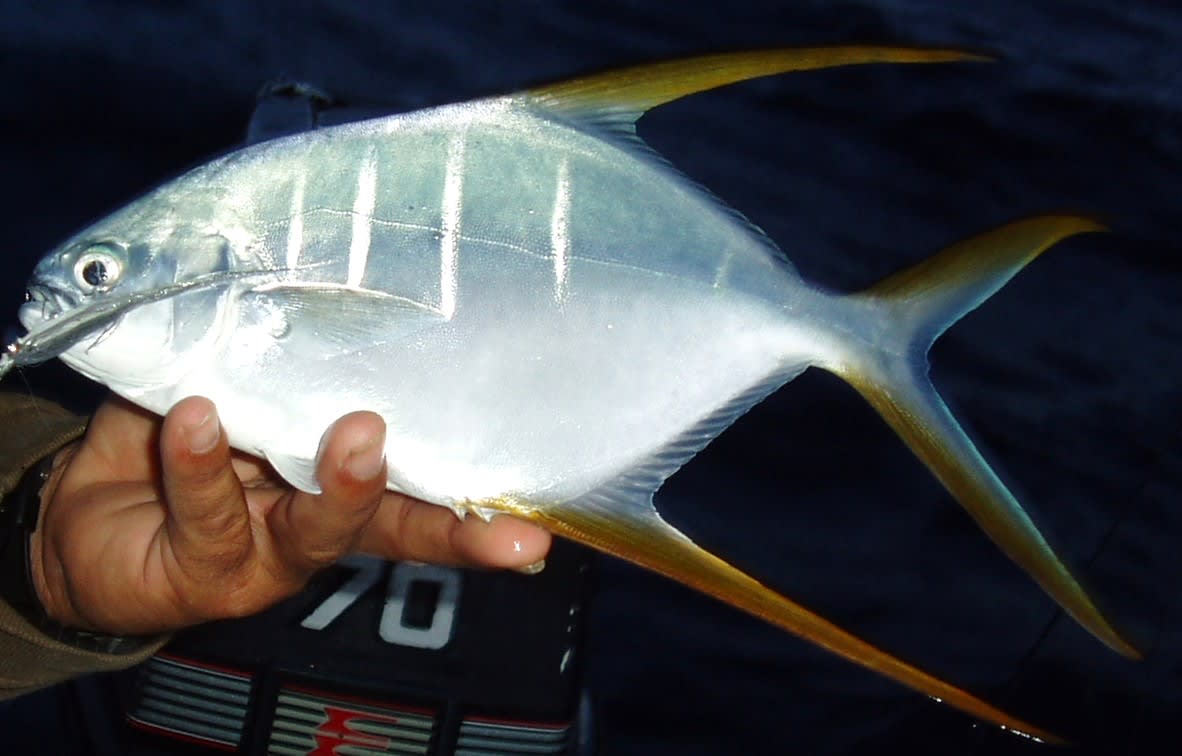
Taxonomy
- Kingdom
- Animalia
- Phylum
- Chordata
- Class
- Actinopterygii
- Order
- Cichliformes
- Family
- Carangidae
- Genus
- Trachinotus
- Species
- rhodopus
Habitat
This species inhabits coastal waters of the eastern Pacific, from shallow bays and estuaries to depths of about 50 meters over sandy or muddy bottoms. It prefers warm tropical and subtropical regions, often near reefs or structures that provide cover. Geographic preferences include areas from Mexico to Peru and the Galápagos Islands.
Diet
Pacific pompano primarily feeds on small crustaceans, such as shrimp and crabs, as well as small fish and mollusks. They exhibit schooling behavior while foraging, typically during daylight hours in nearshore waters. Feeding occurs by picking food from the substrate or chasing prey in open water.
Behavior
Pacific pompano are highly schooling fish, often forming large groups for protection and feeding. They are active during the day and tend to migrate seasonally in response to water temperature and food availability. These fish can be territorial during spawning periods but generally avoid aggressive interactions.
Fishing
Target the Gafftopsail pompano, a prized sport fish in the eastern Pacific, using light tackle spinning or baitcasting outfits with 10-20 pound test line and a 7-9 foot rod for optimal sensitivity and control in nearshore waters; effective techniques include trolling with small spoons or jigs, casting with flashy lures that mimic shrimp or small fish, or bottom fishing with live bait to entice these schooling predators. Use fresh shrimp, crabs, or strip baits as top choices for lures and bait, as they align with the fish's diet of crustaceans and small prey, increasing your catch rate in productive areas. The best seasons are spring through summer when water temperatures rise and spawning occurs, with peak activity during daylight hours, especially early morning or late afternoon when fish are actively foraging in schools. Focus on habitats like shallow bays, estuaries, and sandy or muddy bottoms near reefs and structures from Mexico to Peru and the Galápagos Islands, where these fish are commonly found up to 50 meters deep—cast near drop-offs or current lines for the best results. Record sizes include fish up to 70 cm in length and weighing as much as 3 pounds 12 ounces, with IGFA records for related pompano species highlighting the thrill of landing a trophy; always check local regulations, which serve as effective management tools to maintain healthy populations. As a Least Concern species with stable numbers, recreational fishing supports conservation through license fees that fund habitat restoration and stocking programs, ensuring sustainable practices like catch-and-release help protect these waters for future anglers.
Conservation Status
Listed as Least Concern by IUCN.