
Overview
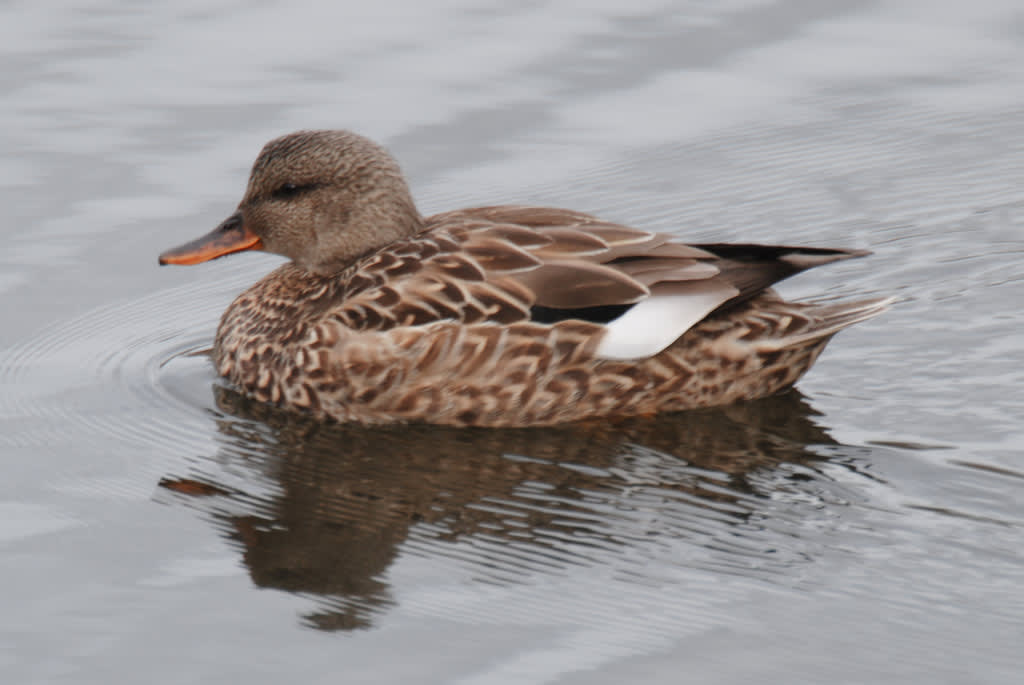
Of all dabbling duck species the Gadwall can feed in deepest water. The Gadwall is a larger duck with the drake reaching 21 inches and the hen around 19 inches. The drake averages 2 lbs. and the hen around 1.8 lbs.. Both drake and hen carry a common brown coloration. The male is a greyish brown with a white belly and black tail. The bill is black and the Gadwall makes a very prominent call that sounds like “eerrtt” with a raspy whistle noise. The hen is similar to males, but has a yellowish orange bill with black spots. The hen makes a quack similar to a mallard, but in a higher pitch. The drake and hen breed later than most duck species. They winter on reservoirs and coastal and blackish marshes. Gadwall primarily feed upon aquatic vegetation. They also will eat smartweed, pondweed, and algae.
Taxonomy
- Kingdom
- Animalia
- Phylum
- Chordata
- Class
- Bird
- Family
- Anatidae
- Genus
- Anas
- Species
- strepera
Habitat
The Gadwall breeds in tall grass wetlands from Upper central United States to Canada. When migration begins these birds travel mainly the central and Mississippi flyway to southern United States and Mexico.
Diet
It feeds by dabbling in shallow water and grazing on land. Its plant diet primarily includes a wide variety of wetland grasses and sedges, and the seeds, stems, leaves and root stalks of aquatic plants, such as eelgrass, pondweed and smartweed. Its animal diet includes mollusks, snails, amphipods, insects, mussels and small fishes.
Behavior
The gadwall is a bird of open wetlands, such as prairie or steppe lakes, wet grassland or marshes with dense fringing vegetation, and usually feeds by dabbling for plant food with head submerged. It nests on the ground, often some distance from water. It is not as gregarious as some dabbling ducks outside the breeding season and tends to form only small flocks. This is a fairly quiet species; the male has a hoarse whistling call, and the female has a mallard-like quack. The young birds are fed insects at first; adults also eat some molluscs and insects during the nesting season. The gadwall is one of the species to which the Agreement on the Conservation of African-Eurasian Migratory Waterbirds (AEWA) applies.
Hunting
Typically hunted with a 12 ga shotgun. Shot size #2-4 is sufficient. Effectively hunted with decoys and calling. Dogs are used for bird retrieval. Steel shot is required for waterfowl in the United States.
Conservation Status
Listed as Least Concern by IUCN.