
Overview
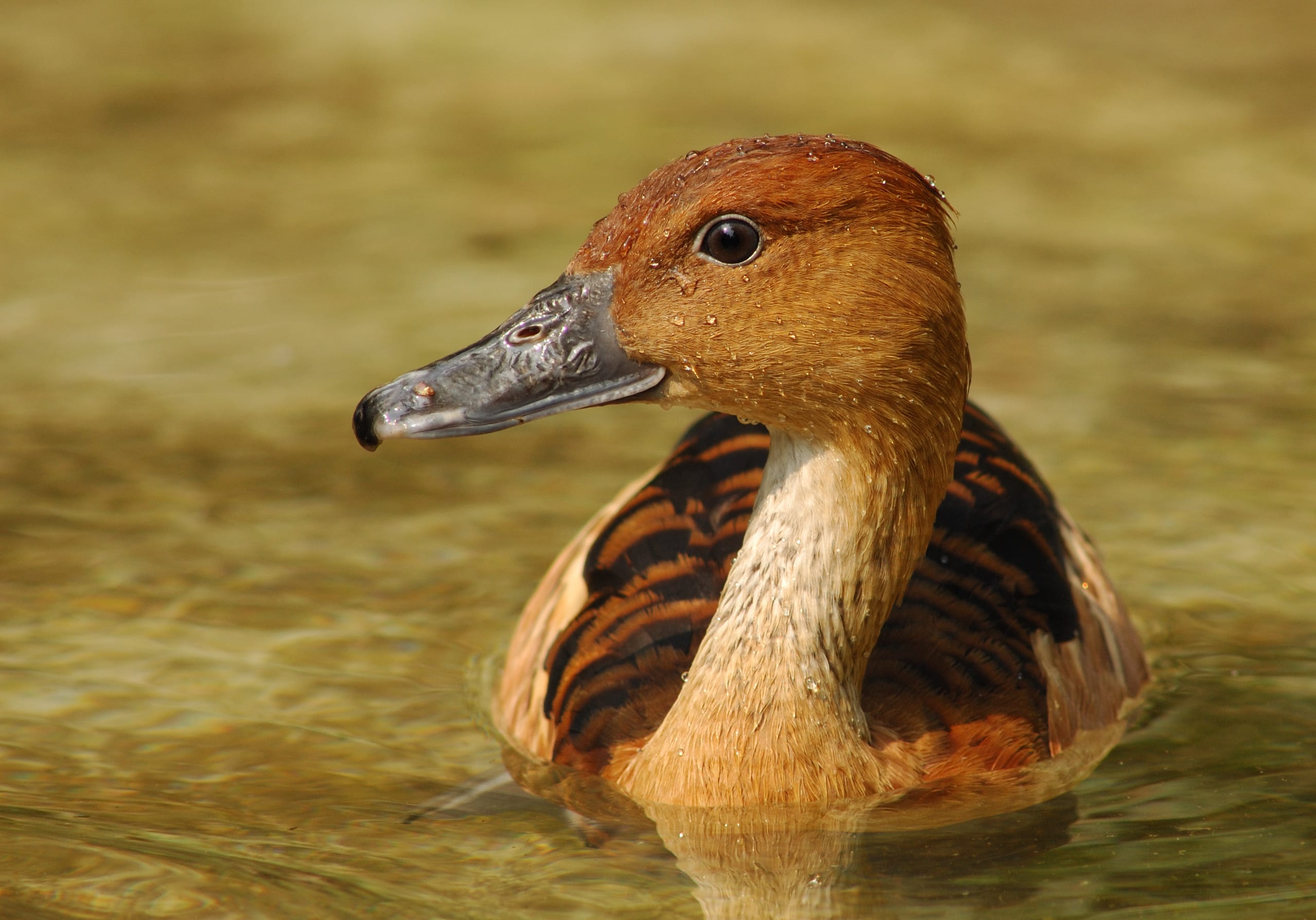
The Fulvous Whistling Ducks are very vocal birds when in flight and also when feeding. These ducks have an average length of around 17 inches, and a weight of around 1.5 lbs.. Both male and female Fulvous ducks have a brown crown and a black colored hind-neck. The sides, neck, belly, and chest have a tan brown color with the sides of the neck being pale white. The back of the bird is brown with chestnut feather fringes. A white “V” is distinctively placed between the blackish colored tail and brown back. The bill, feet, and legs are dark brown. These ducks prefer to be nesting in rice fields, long grass, or cattails. The drake and hen will migrate to the east coast of Mexico where they can be found in trees, long grass, or in dense vegetative areas. The food for these birds consists of feeding at night on waste grain or seeds found in fields or shallow water.
Taxonomy
- Kingdom
- Animalia
- Phylum
- Chordata
- Class
- Bird
- Family
- Anatidae
- Genus
- Dendrocygna
- Species
- bicolor
Habitat
The fulvous whistling duck is found in lowland marshes and swamps in open, flat country, and it avoids wooded areas. It is particularly attracted to wetlands with plenty of emergent vegetation, including rice fields. It is not normally a mountain species, breeding in Venezuela, for example, only up 300 m (980 ft), but the single Peruvian breeding record was at 4,080 m (13,390 ft).
Diet
The fulvous whistling duck feeds in wetlands by day or night, often in mixed flocks with relatives such as white-faced or black-bellied whistling ducks. Its food is generally plant material, including seeds, bulbs, grasses and stems, but females may include animal items such as aquatic worms, molluscs and insects as they prepare for egg-laying, which may then comprise up to 4% of their diet.
Behavior
This species is usually found in small groups, although substantial flocks can form at favoured sites. It walks well, without waddling, and although it normally feeds by upending, it can dive if necessary. It does not often perch in trees, unlike other whistling ducks. It flies at low altitude with slow wingbeats and trailing feet, in loose flocks rather than tight formation. It feeds during the day and at night in fairly large flocks, often with other whistling duck species, but rests or sleeps in smaller groups in the middle of the day. They are noisy and display their aggression towards other individuals by throwing back their heads. Before taking off in alarm, they often shake their head sideways.
Hunting
Typically hunted with a 12 ga shotgun. Shot size #2-4 is sufficient. Effectively hunted with decoys and calling. Dogs are used for bird retrieval. Steel shot is required for waterfowl in the United States.
Conservation Status
Listed as Least Concern by IUCN.