
Overview
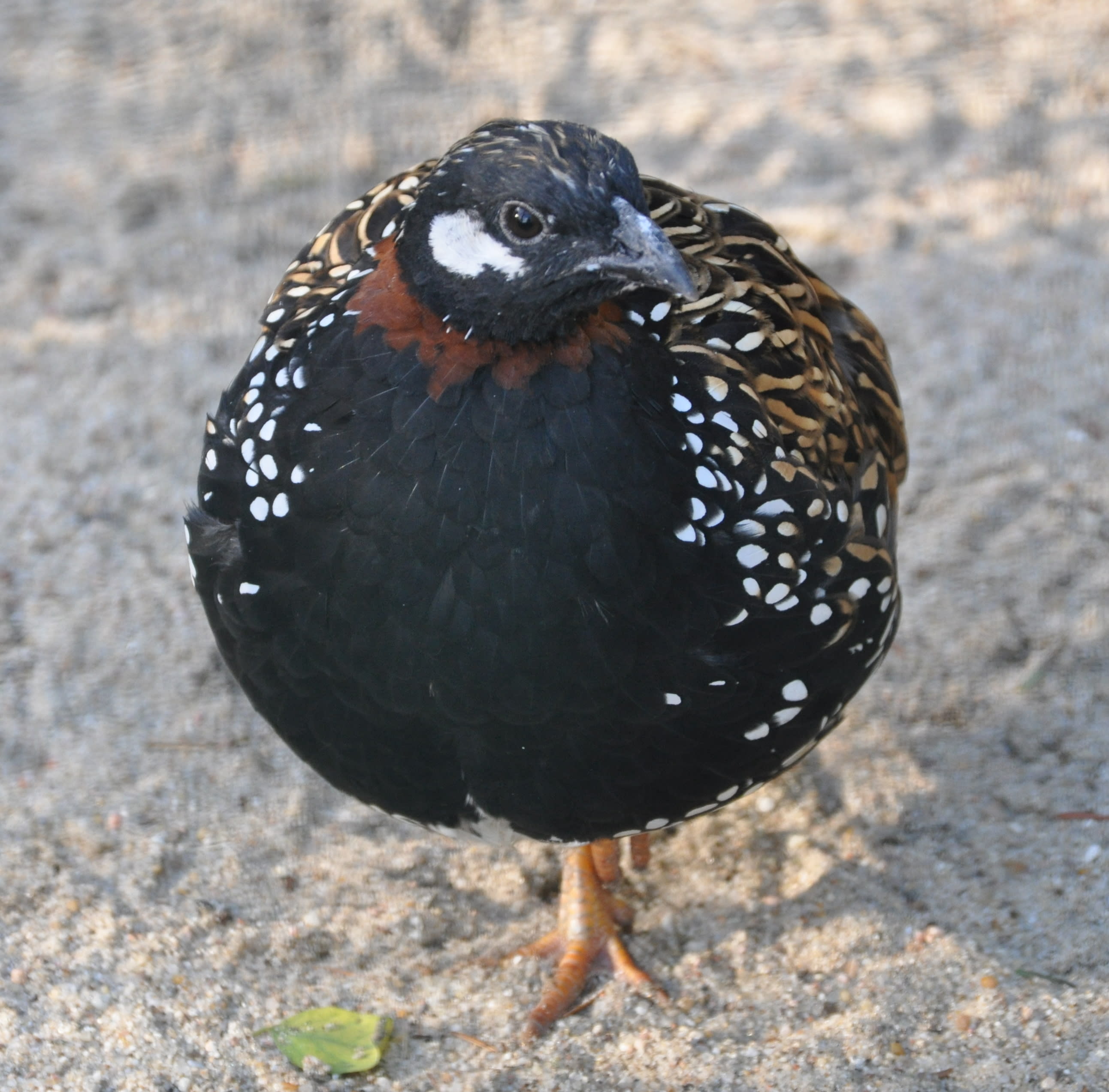
The black francolin has a curved head, a black throat, and a brown crown.
Taxonomy
- Kingdom
- Animalia
- Phylum
- Chordata
- Class
- Bird
- Family
- Phasianidae
- Genus
- Francolinus
- Species
- francolinus
Habitat
Black francolins appear to be found in scrubby habitats with plenty of cultivated crops tall enough to offer shelter and open beneath to provide escape routes and easy travel. They prefer the areas of thick vegetation, usually near water. They are not forest birds but will frequent brush land and wood edges associated with grass land. They appear to be more closely associated to water than chukars are, and in drier areas.
Diet
Seeds, insects, and berries.
Behavior
The black francolin only flies when disturbed. It has a Pheasant’s explosive flight, but prefers to creep away unseen. The call of the black francolin, described as a loud ringing klik cheek-cheek-cheerakik or kik-kik-kik, kwee-kweeeee-kwee can be heard in the mornings and evenings and almost all day during the breeding season. The male calls standing on an earth mound, bund, rock or a low tree branch and is soon joined by other birds answering from all directions. The normal Clutch size between 10 and 14 eggs and only the hen incubates the eggs, the incubation period is 18 to 19 days and the breeding season is April to June and the young ones will appear in April through October. The color of the egg is white-spotted olive or pale brown. Black francolins are monogamous.
Hunting
Its range was formerly more extensive, but over-hunting has reduced its distribution and numbers. Fragmented populations occur in the western part of its range
Conservation Status
Listed as Least Concern by IUCN.