
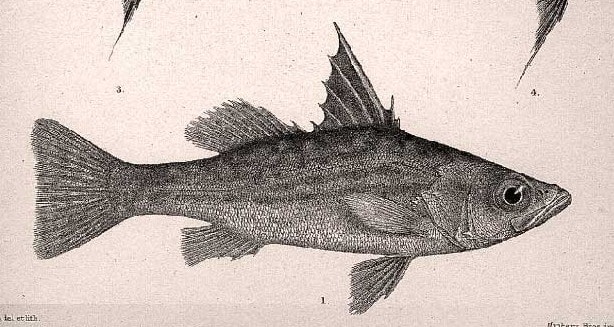
Taxonomy
- Kingdom
- Animalia
- Phylum
- Chordata
- Class
- Actinopterygii
- Order
- Perciformes
- Family
- Latidae
- Genus
- Lates
- Species
- microlepis
Habitat
This species primarily inhabits the deep, open waters of Lake Tanganyika and connected rivers like the Rusizi and Malagarasi in East Africa. It prefers rocky or sandy substrates in freshwater environments, often at depths greater than 50 meters where it can find cooler temperatures and abundant prey.
Diet
Forktailed lates mainly feeds on smaller fish such as cichlids, sardines, and other pelagic species in Lake Tanganyika. It is an ambush predator that hunts actively at dusk and dawn, using its speed and sharp teeth to capture prey in open water.
Behavior
Forktailed lates are typically solitary or form small schools, exhibiting territorial behavior around feeding grounds. They are most active during twilight hours, using stealth and speed to hunt, and they migrate seasonally within the lake for spawning.
Fishing
Forktail lates, a powerful ambush predator in East Africa's Lake Tanganyika and rivers like the Rusizi and Malagarasi, offers exciting sport fishing opportunities for experienced anglers, while supporting conservation through regulated practices that fund habitat protection in these vital waterways. Target them using trolling or deep jigging techniques in open, deep waters beyond 50 meters, focusing on rocky or sandy substrates where they hunt; cast with medium-heavy to heavy spinning or trolling rods paired with reels spooled in 20-30 lb test line, and use strong leaders to handle their sharp teeth and powerful runs. Opt for lures that mimic small fish like cichlids or sardines, such as metal jigs, soft plastics, or crankbaits in silver or greenish-blue colors, trolled at varying depths during dawn and dusk when they are most active. The best season is the rainy period from November to March, coinciding with their spawning migration, though year-round fishing is possible with proper permits; aim for early morning or late evening for higher success rates. In Lake Tanganyika's deep pelagic zones in Zambia, Burundi, the Democratic Republic of the Congo, and Tanzania, you'll find the largest specimens, with records reaching up to 18 pounds 4 ounces and lengths over 1 meter, though IGFA all-tackle records are not established for this species. Conservation is critical given their Endangered status by the IUCN, with angler-funded programs promoting catch-and-release and slot limits as effective tools to maintain healthy populations and combat overfishing, ensuring that recreational fishing contributes to stocking efforts and waterway protection in this biodiverse region.
Conservation Status
Listed as Endangered by IUCN.