
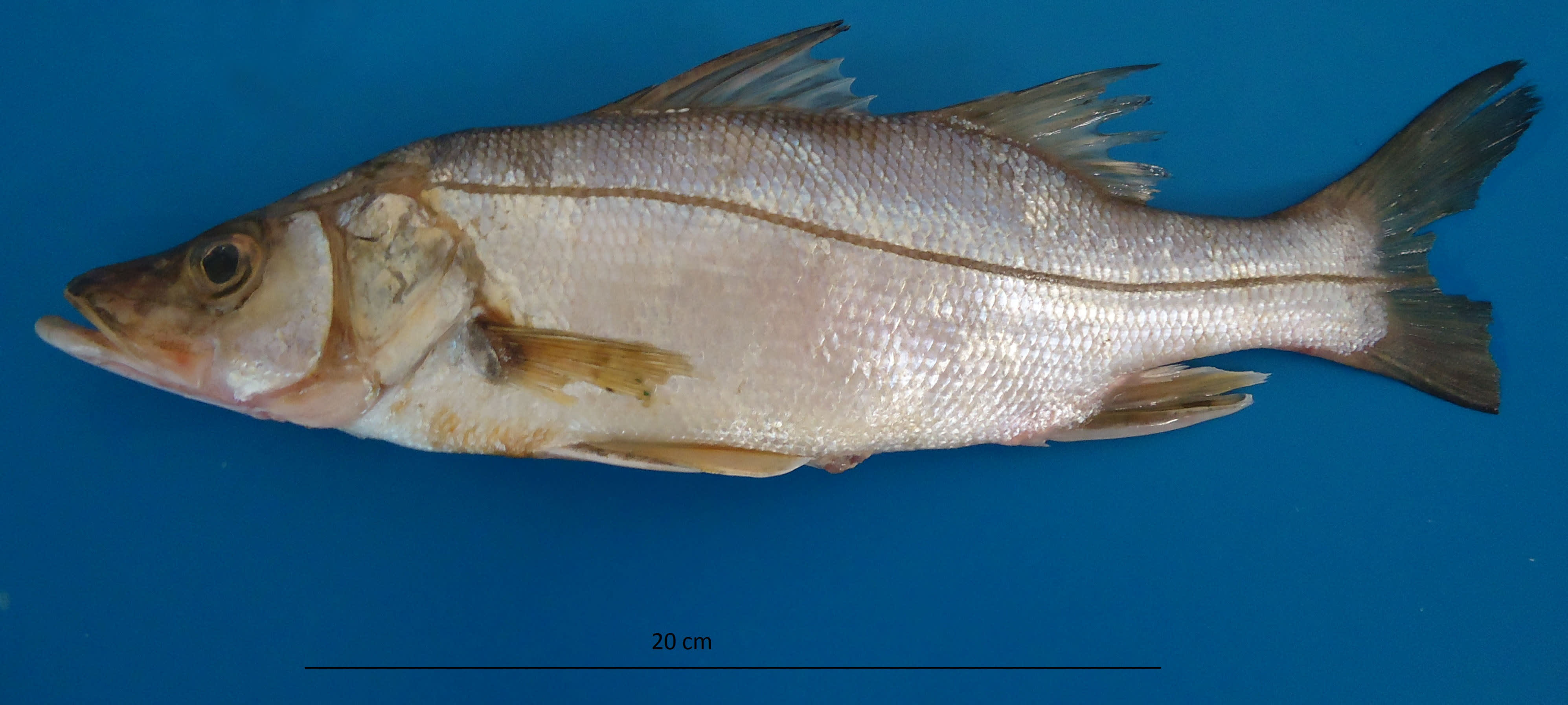
Taxonomy
- Kingdom
- Animalia
- Phylum
- Chordata
- Class
- Chondrichthyes
- Order
- Heterodontiformes
- Family
- Centrophoridae
- Genus
- Centropomus
- Species
- parallelus
Habitat
Fat snook inhabit coastal waters, estuaries, mangroves, and the lower reaches of rivers in the western Atlantic, from Florida to Brazil. They prefer brackish environments with structures like roots or rocks for cover, and are commonly found in shallow, warm waters up to depths of about 20 meters.
Diet
Fat snook are carnivorous, primarily feeding on small fish, shrimp, crabs, and other crustaceans. They are nocturnal hunters, using ambush tactics in shallow waters to capture prey, and feed most actively during low light conditions like dusk and dawn.
Behavior
Fat snook are typically solitary or form small groups, exhibiting territorial behavior around structures like mangroves. They are primarily nocturnal, resting during the day and actively hunting at night, with aggressive strikes when pursuing prey. These fish are known for their strong swimming ability and adaptability to varying salinity levels.
Fishing
Fat snook are a popular sport fish prized for their aggressive strikes and acrobatic fights, commonly targeted in coastal waters, estuaries, mangroves, and lower river reaches from Florida to Brazil, including hotspots like the Bahamas, Belize, and Aruba. Use ambush-style techniques such as casting jigs, topwater lures, or live bait presentations to mimic their natural prey like shrimp, small fish, and crabs, focusing on structures like roots and rocks in shallow, brackish waters up to 20 meters deep. Opt for medium-heavy spinning or baitcasting tackle with 10-20 lb test monofilament or braided line, paired with a sensitive rod and a reel with a strong drag system to manage their powerful runs. The best seasons are the warmer months from spring to summer during spawning periods, with peak activity at dawn and dusk when they hunt nocturnally; always check local regulations for effective management tools like slot limits or catch-and-release zones that support population stability. Fat snook can grow up to 10 pounds 14 ounces and lengths of 1 meter, with the IGFA all-tackle record for related snook species at 53 pounds 10 ounces for common snook, highlighting their impressive size potential. As a Least Concern species per IUCN, conservation is bolstered by angler-funded programs through license fees that protect habitats and promote sustainable practices, ensuring these fish thrive for future generations.
Conservation Status
Listed as Least Concern by IUCN.