
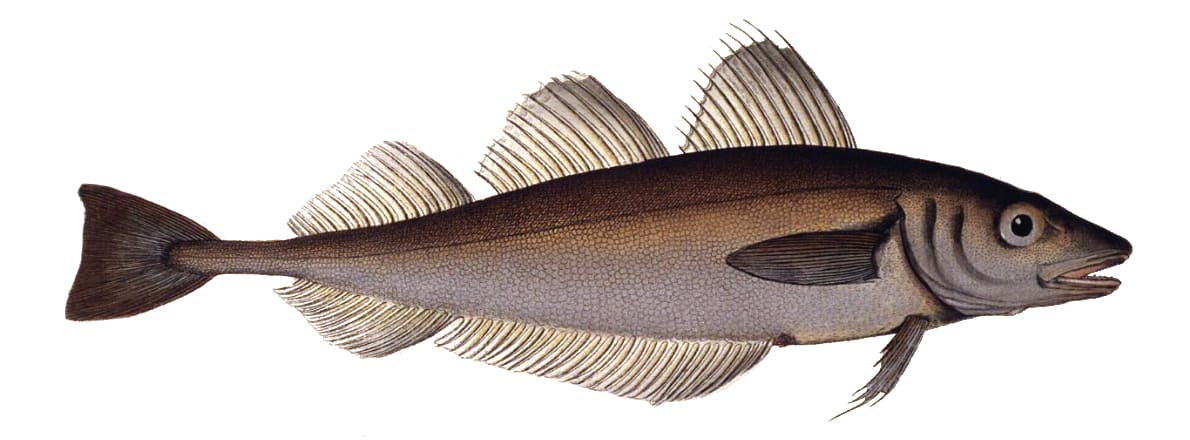
Taxonomy
- Kingdom
- Animalia
- Phylum
- Chordata
- Class
- Actinopterygii
- Order
- Perciformes
- Family
- Gadidae
- Genus
- Merlangius
- Species
- merlangus
Habitat
European whiting inhabits continental shelf waters of the Northeast Atlantic, from Norway to the Mediterranean and Black Sea. It prefers sandy or muddy seabeds at depths of 10 to 200 meters, often forming schools in coastal and offshore areas. This species is adaptable to varying salinities in estuarine environments.
Diet
European whiting primarily feeds on small fish like sand eels and herring juveniles, as well as crustaceans such as shrimp and crabs. They are benthic feeders, foraging along the seafloor during dawn and dusk, using their barbel to detect prey in low-light conditions.
Behavior
European whiting are highly schooling fish, forming large groups to evade predators and forage efficiently. They exhibit nocturnal activity patterns, being more active at night for feeding, and undertake seasonal migrations to deeper waters in winter. These fish are generally non-territorial but may scatter when threatened.
Fishing
Anglers targeting European whiting will find this schooling species a rewarding sport fish that bolsters aquatic conservation through license fees and excise taxes, funding habitat restoration and population monitoring programs. Employ bottom fishing techniques with a basic paternoster or running ledger rig to present bait near the seafloor, casting from boats or piers in coastal waters for the best results. Use light to medium spinning rods with 10-20 lb test monofilament line, paired with size 1-2 hooks and a 1-4 oz sinker to reach depths of 10-200 meters; effective baits include shrimp, worms, or small fish strips to mimic their diet of sand eels and crustaceans, while metal jigs or soft plastics can entice strikes. The prime seasons are spring and summer, particularly from February to June during spawning migrations, with dawn and dusk offering the highest activity for feeding; focus on sandy or muddy seabeds in the Northeast Atlantic, from Norway to the Mediterranean and Black Sea, where they form large schools in estuarine and offshore areas. Record sizes reach up to 70 cm and 6 lbs 13 oz, with IGFA all-tackle records highlighting the potential for trophy catches. Conservation-wise, European whiting is listed as Least Concern by the IUCN, and angler-supported measures like slot limits and catch-and-release practices in certain regions ensure sustainable populations, demonstrating how regulated fishing contributes to protecting these vital marine ecosystems.
Conservation Status
Listed as Least Concern by IUCN.