
Overview
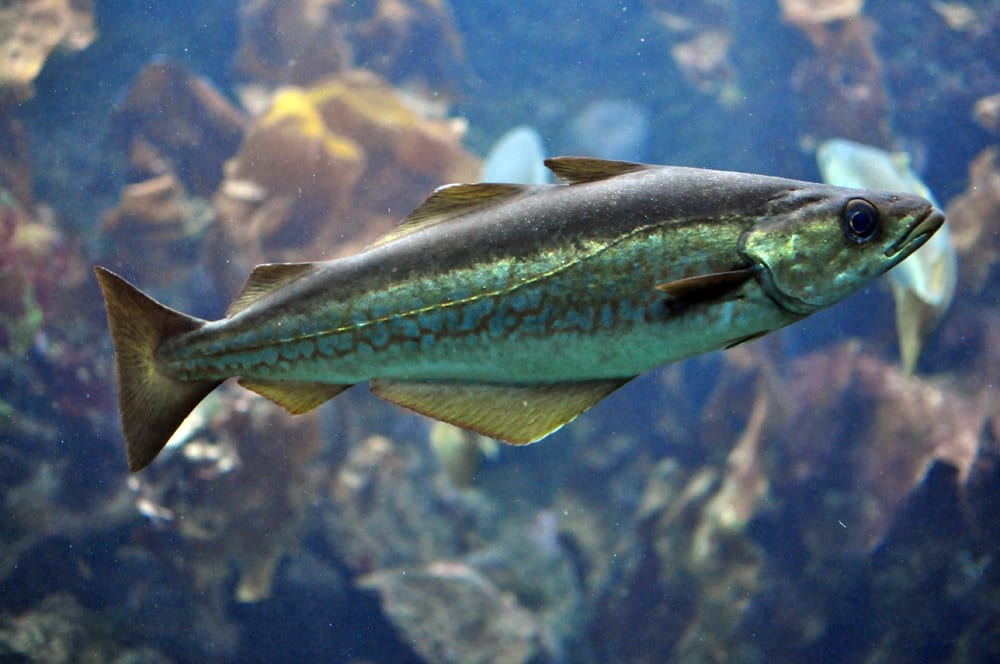
It is a member of the cod family Gadidae and can be distinguished from similar looking species in its own family by a combination of features. Its lower jaw projects beyond the upper jaw, its tail is concave, its lateral line is dark greenish brown and arches sharply above the pectoral fins, and the chin lacks barbels. Coloration of this species is usually dark brown or olive dorsally. The sides of the fish change rather abruptly to a paler, yellowish color. Sometimes dark yellow or orange spots or stripes are apparent on the upper flanks.
Taxonomy
- Kingdom
- Animalia
- Phylum
- Chordata
- Class
- Actinopterygii
- Order
- Perciformes
- Family
- Gadidae
- Genus
- Pollachius
- Species
- pollachius
Habitat
It is mainly an in shore species found near rocky coasts and over rocky bottoms. Though a bottom feeder it may also be found swimming in shoals in midwaters.
Diet
Its diet includes sand eels, sprats, herring, smaller cod like fish, wrasses, rocklings, blennies, squid, worms and large crustaceans.
Behavior
European pollock form large schools for protection and feeding, often swimming in midwater or near the bottom. They are active predators during the day, chasing prey in bursts of speed, and exhibit seasonal migrations to deeper waters in winter. They can be territorial around feeding grounds but generally prioritize group dynamics.
Fishing
It is a good sport fish and a strong fighter. It is in the words of one author “a crash dive artist par excellence” and is difficult to stop before it reaches sanctuary. Bait fishing, casting, jigging or trolling are all successful fishing methods. Baits and lures include diamond jigs, squid, herring, clams, worms, smaller cod species, crabs, shrimp, and prawns, spoons, tub lures, spinners, plugs and flies. They are an excellent table fish.
Conservation Status
Listed as Least Concern by IUCN.