
Overview
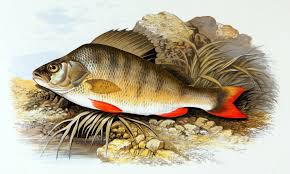
One of only three extant members of the genus Perca, European perch can be distinguished from all other members of the Percidae family in Europe by: 1) pelvic and anal fins yellow to red in color, 2) a conspicuous spot in the posterior part of the first dorsal fin, and 3) 5-8 dark bars across the flanks that are often Y-shaped.
Taxonomy
- Kingdom
- Animalia
- Phylum
- Chordata
- Class
- Actinopterygii
- Order
- Perciformes
- Family
- Percidae
- Genus
- Perca
- Species
- fluviatilis
Habitat
Its popularity with anglers is undoubtedly due to the diverse habitats in which it can be found including estuarine lagoons, lakes, rivers and streams.
Diet
Juvenile European perch primarily feed on benthic invertebrates such as insects, crustaceans, and small worms. As they grow larger, typically beyond 12 cm, their diet shifts to include small fish like minnows and sticklebacks, as well as amphibians and insects. They are opportunistic predators, often feeding actively during dawn and dusk in various water depths.
Behavior
Spawning generally takes place from February to July, depending on location. Juvenile perch are opportunistic predators that feed on a variety of benthic invertebrates. Once they reach roughly 12 cm in standard length, they become more piscivorous in nature, with an increasing amount of their diet consisting of small fishes.
Fishing
Perch are highly sought after by anglers because they can be caught using a wide variety of baits. As with most fish, live or dead bait works extremely well and maggots, worms and craysfish are all reported to work well. Baits may be fished from a float near the surface or on the bottom, depending on the depth of the water. They will also readily hit artificial lures such as small spoons, plugs, jigs and also flies. They are also a common target for ice fishermen, especially in Scandinavia and Russia. European perch are also widely considered to be one of the best eating freshwater species of fish.
Conservation Status
Listed as Least Concern by IUCN.