
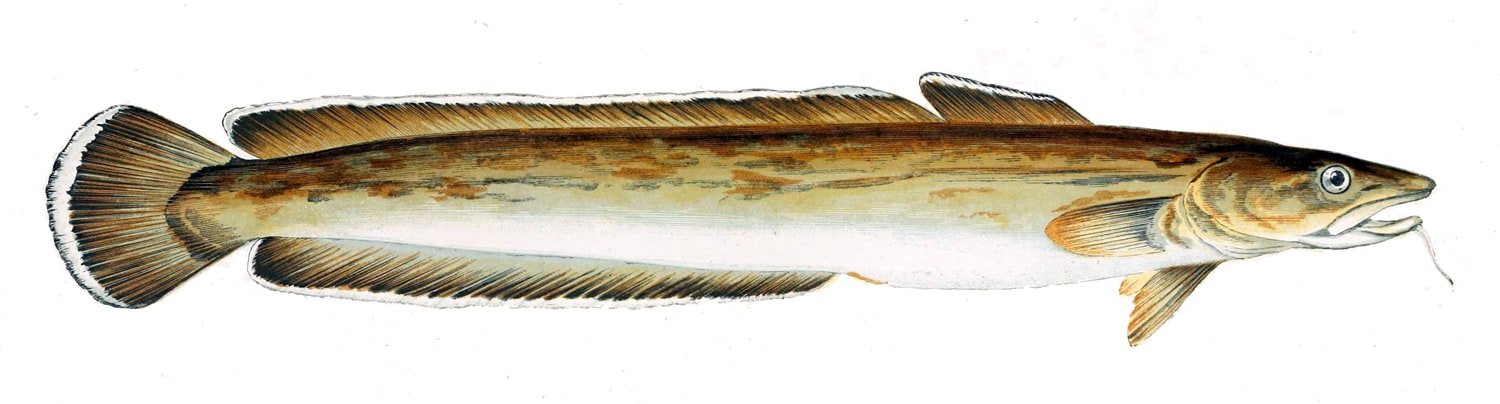
Taxonomy
- Kingdom
- Animalia
- Phylum
- Chordata
- Class
- Actinopterygii
- Order
- Perciformes
- Family
- Lotidae
- Genus
- Molva
- Species
- molva
Habitat
European ling primarily inhabit the continental shelves and slopes of the Northeast Atlantic Ocean, from the Barents Sea to the Mediterranean and Black Sea. They prefer rocky or sandy bottoms at depths of 50 to 1000 meters, often staying close to the seafloor in cold, deep waters.
Diet
European ling are carnivorous and feed mainly on fish such as herring, whiting, and sand eels, as well as squid and crustaceans. They hunt actively during the day using ambush tactics near the ocean floor, typically targeting prey in deeper waters.
Behavior
European ling are typically solitary or form small groups, spending most of their time near the seabed in search of food. They exhibit territorial behavior around feeding areas and are more active during daylight hours, using their excellent camouflage to avoid detection. They are not known for complex social structures but can migrate seasonally for spawning.
Fishing
Target European ling, a prized sport fish in the Northeast Atlantic from the Barents Sea to the Mediterranean, using effective bottom fishing or jigging techniques in deep waters to mimic their ambush hunting style; deploy heavy-duty rods with 20-50 pound test lines, sturdy reels, and strong hooks to handle their powerful runs in depths of 50 to 1000 meters over rocky or sandy bottoms. Use live baits like herring, sand eels, or squid, or opt for metal jigs and large lures that imitate their primary prey for the best results. The prime season runs from late spring through summer when they are most active, with peak bites during daylight hours, especially around dawn and dusk near the seafloor. Focus on continental shelves and slopes around the United Kingdom, Iceland, Norway, and other North Atlantic regions, where they patrol for food—always check local regulations for bag limits and size restrictions that support sustainable populations. The IGFA all-tackle world record stands at 88 pounds 6 ounces, caught off Norway, highlighting their impressive size potential. As a species listed as Data Deficient by the IUCN, angler-funded programs through fishing licenses and excise taxes play a key role in habitat protection and population monitoring, ensuring catch-and-release practices help maintain healthy stocks for future generations.
Conservation Status
Listed as Data Deficient by IUCN.