
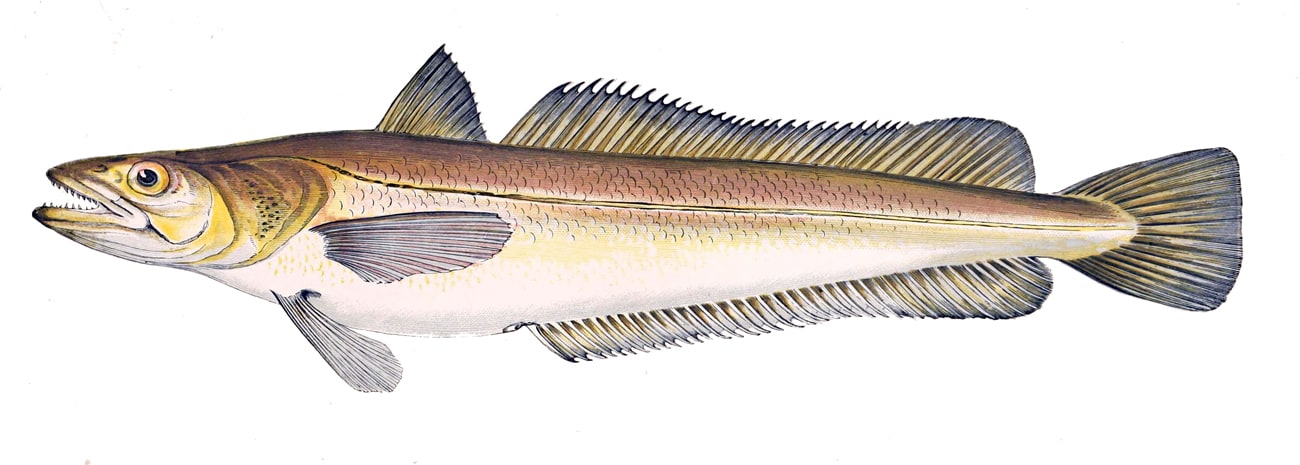
Taxonomy
- Kingdom
- Animalia
- Phylum
- Chordata
- Class
- Actinopterygii
- Order
- Perciformes
- Family
- Merlucciidae
- Genus
- Merluccius
- Species
- merluccius
Habitat
European hake primarily inhabit the continental shelves and slopes of the Northeast Atlantic Ocean and Mediterranean Sea, at depths ranging from 70 to 1,000 meters. They prefer muddy or sandy bottoms and areas with moderate currents, often moving to shallower waters in summer and deeper ones in winter.
Diet
European hake are carnivorous, feeding mainly on small fish like anchovies and sardines, as well as squid and crustaceans. They are nocturnal hunters, actively foraging on the ocean floor or in midwater during the night. Their feeding behavior involves ambushing prey with quick strikes.
Behavior
European hake are typically solitary or form loose schools, and they are nocturnal, hunting actively at night. They exhibit seasonal migrations, moving to deeper waters in winter and shallower areas in summer to follow food sources. These fish are aggressive predators but can be territorial around feeding grounds.
Fishing
Target European hake in the Northeast Atlantic Ocean, Mediterranean Sea, and surrounding areas like the Adriatic, Ionian, and Tyrrhenian Seas, focusing on continental shelves and slopes at depths of 70 to 1,000 meters over muddy or sandy bottoms; they migrate to shallower waters in summer, making it the prime season, with nighttime being the best time due to their nocturnal hunting behavior. Use bottom fishing or deep-sea jigging techniques for the most success, employing heavy tackle such as robust rods (8-12 feet), high-capacity reels with 20-50 lb test monofilament or braided line, and sinkers or downriggers to reach these depths; effective baits include live or dead anchovies, sardines, squid, or crustaceans, while metal jigs, soft plastics, or squid imitations work well as lures to mimic their prey. The IGFA all-tackle world record stands at 29 pounds 2 ounces, caught in the Atlantic. As a key species in recreational and commercial fisheries, European hake benefits from angler-funded conservation efforts, including quotas and stock assessments that support sustainable populations—such as catch limits and seasonal closures, which are effective tools for protecting vulnerable stocks as noted by the IUCN, ensuring long-term habitat health through regulated fishing practices.
Conservation Status
Listed as Vulnerable by IUCN.