
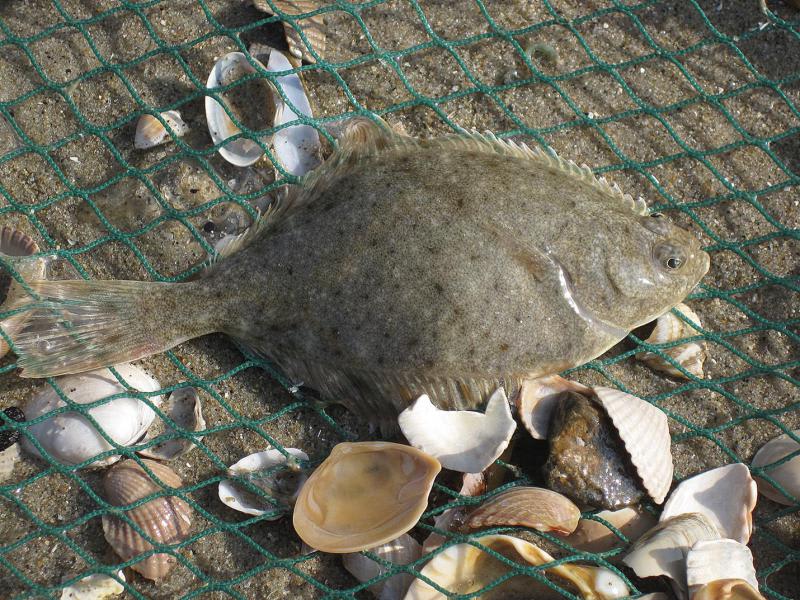
Taxonomy
- Kingdom
- Animalia
- Phylum
- Chordata
- Class
- Actinopterygii
- Order
- Perciformes
- Family
- Pleuronectidae
- Genus
- Platichthys
- Species
- flesus
Habitat
European flounders primarily inhabit coastal waters, estuaries, and shallow seas with sandy or muddy bottoms in the Northeast Atlantic and Mediterranean regions. They tolerate a wide range of salinities, from fully marine to brackish environments, often found at depths up to 100 meters.
Diet
European flounders are carnivorous bottom feeders that mainly consume polychaete worms, crustaceans like shrimp and crabs, and small fish or mollusks. They hunt by ambushing prey while partially buried in sediment, with feeding activity most active during twilight or night hours.
Behavior
European flounders are solitary and benthic, spending most of their time buried in sand or mud to avoid detection. They are primarily nocturnal, emerging to forage at night, and can rapidly change color to match their surroundings for camouflage. This species exhibits migratory behavior in some populations, moving to deeper waters in winter.
Fishing
Target the European flounder, a popular flatfish species in coastal Europe, using effective bottom fishing techniques like bait fishing with a simple rig featuring a sinker to keep your line on the seafloor, or light jigging with soft plastics to mimic their prey; cast from shorelines, piers, or boats in shallow waters up to 100 meters deep with sandy or muddy bottoms in estuaries and coastal areas of the Northeast Atlantic, Mediterranean, and Black Sea regions for the best results. Use medium-light spinning or baitcasting tackle with a 7-9 foot rod, 10-20 lb test line, and size 1-4 hooks baited with live or fresh options like worms, shrimp, crabs, or small fish pieces, as these match their carnivorous diet of polychaetes and crustaceans—opt for lures such as grub tails or shrimp imitations for added versatility. The prime season runs from spring through summer when they're more active during spawning migrations, with the best bites occurring at twilight or night when they emerge to feed; focus on tidal areas with moving water for higher success rates. Record sizes include the IGFA all-tackle world record of 5.80 kg (12 lb 13 oz) caught in 1988, showcasing the thrill of landing these camouflaged fighters that can reach up to 6 lbs 7 oz in weight and 60 cm in length. Conservation-wise, European flounders are managed through angler-funded programs that support habitat restoration and population monitoring, with practices like slot limits and minimum size regulations in many regions serving as effective tools to maintain healthy stocks—always adhere to local rules, practice catch-and-release for undersized fish, and remember that your fishing license fees directly contribute to protecting these vital waterways and ensuring sustainable populations for future generations.
Conservation Status
Listed as Least Concern by IUCN.