
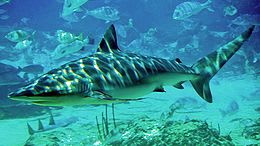
Taxonomy
- Kingdom
- Animalia
- Phylum
- Chordata
- Class
- Chondrichthyes
- Order
- Carcharhiniformes
- Family
- Carcharhinidae
- Genus
- Carcharhinus
- Species
- obscurus
Habitat
Dusky sharks inhabit coastal and offshore waters, from the surface down to depths of about 400 meters, often near continental shelves, islands, and coral reefs. They prefer temperate and tropical regions in the Atlantic, Indian, and Pacific Oceans, showing a strong association with areas of high productivity like upwelling zones.
Diet
Dusky sharks primarily feed on bony fish such as mackerel and herring, as well as smaller sharks, rays, and cephalopods like squid. They exhibit opportunistic feeding behavior, often hunting alone or in schools, and are most active during dawn and dusk when prey is abundant.
Behavior
Dusky sharks are often solitary but may form loose schools, particularly juveniles, and exhibit migratory patterns to follow food sources or warmer waters seasonally. They are curious and may investigate boats or divers, showing territorial behavior in feeding areas. This species is generally active during the day but can be opportunistic in their hunting times.
Fishing
Targeting dusky sharks offers exciting sport fishing opportunities while supporting conservation through regulated angling that funds habitat protection and research; however, due to their vulnerable status, anglers must follow strict catch-and-release practices as effective management tools to maintain healthy populations. Best techniques include trolling with live bait or chumming to attract these powerful predators, using heavy tackle to handle their strength and ensure safe release, such as a sturdy 80-130 pound test rod and reel combo with circle hooks to minimize injury. Recommended bait and lures are live fish like mackerel or herring, or fresh squid, which mimic their natural diet and increase hook-up rates; artificial lures can also work in productive areas. The best season is summer in temperate regions like the Northwest Atlantic, with peak activity at dawn and dusk when they hunt most actively, allowing anglers to target them in coastal and offshore habitats near continental shelves, islands, and coral reefs at depths up to 400 meters—focus on upwelling zones for higher success. The IGFA all-tackle world record for dusky shark stands at 764 pounds, caught in the Western Atlantic, showcasing their impressive size potential. Angler-funded programs, including license fees and excise taxes, play a key role in stocking and protecting shark populations, so always check local regulations, such as mandatory release in U.S. waters, which help sustain these migratory species and promote long-term conservation efforts.
Conservation Status
Listed as Vulnerable by IUCN.