
Taxonomy
- Kingdom
- Animalia
- Phylum
- Chordata
- Class
- Actinopterygii
- Order
- Scorpaeniformes
- Family
- Serranidae
- Genus
- Epinephelus
- Species
- marginatus
Habitat
Dusky groupers primarily inhabit rocky reefs, caves, and shipwrecks in the eastern Atlantic Ocean and Mediterranean Sea, from shallow coastal waters down to depths of 300 meters. They prefer warm temperate to subtropical waters with structures for shelter and ambushing prey. These areas often include coral formations or artificial reefs.
Diet
Dusky groupers are carnivorous, feeding mainly on fish such as wrasses and mullets, as well as crustaceans like crabs and shrimp, and cephalopods including octopuses. They employ an ambush strategy, hiding in crevices and striking quickly at prey, with feeding most active during the day. Their diet varies by location and availability of prey on the seafloor.
Behavior
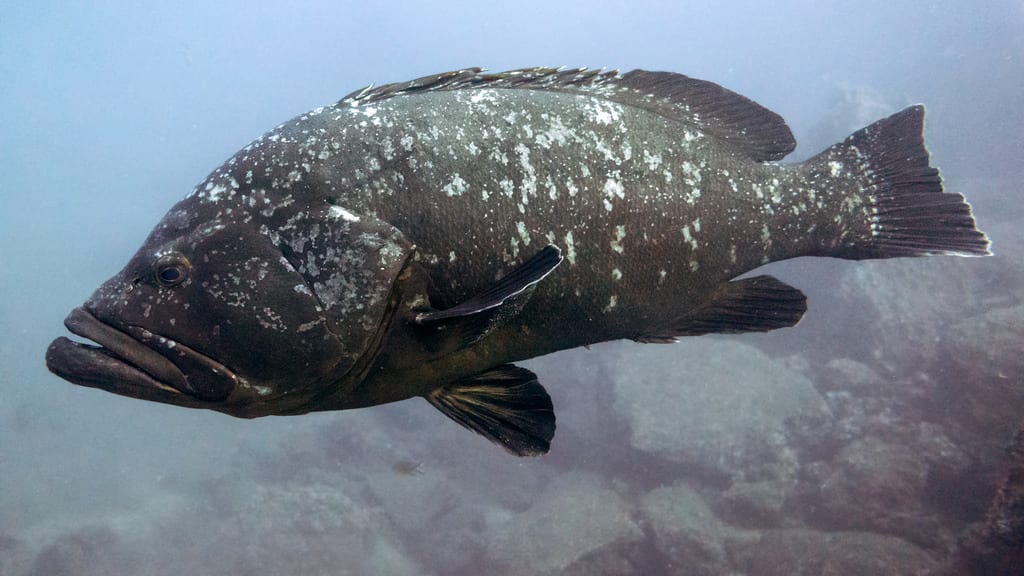
Dusky groupers are solitary and highly territorial, aggressively defending their home ranges from intruders. They are primarily nocturnal but can be active during the day, using camouflage to ambush prey from hiding spots. These fish exhibit protogynous hermaphroditism, starting as females and changing to males, and they are known for their curiosity towards divers.
Fishing
Dusky groupers are a highly regarded sport fish in the Atlantic and Mediterranean regions, providing anglers with thrilling battles around rocky reefs, caves, and shipwrecks, while supporting conservation through license fees that fund habitat protection. Employ bottom fishing or trolling techniques with heavy tackle, such as a robust 7-9 foot rod rated for 20-50 lb line, a high-capacity reel to handle deep-water fights, and strong circle hooks to minimize injury during catch-and-release; use live baits like small fish, crabs, or shrimp, or artificial lures that imitate these prey to entice their ambush strikes. The best season is summer during spawning, with optimal times at dawn or dusk when they are most active in warm temperate waters from shallow coasts to 300 meters deep—target areas with structures like coral formations or artificial reefs in locations such as the Mediterranean Sea, Italy, or Sardinia for the highest success. The IGFA all-tackle world record is 46 pounds 13 ounces, caught in the Mediterranean, showcasing the species' impressive size potential. As an Endangered species per IUCN, dusky groupers benefit from effective management tools like slot limits, catch-and-release requirements in many regions, and angler-supported stocking programs that ensure sustainable populations and protect vital waterways for future generations.
Conservation Status
Listed as Endangered by IUCN.