
Overview
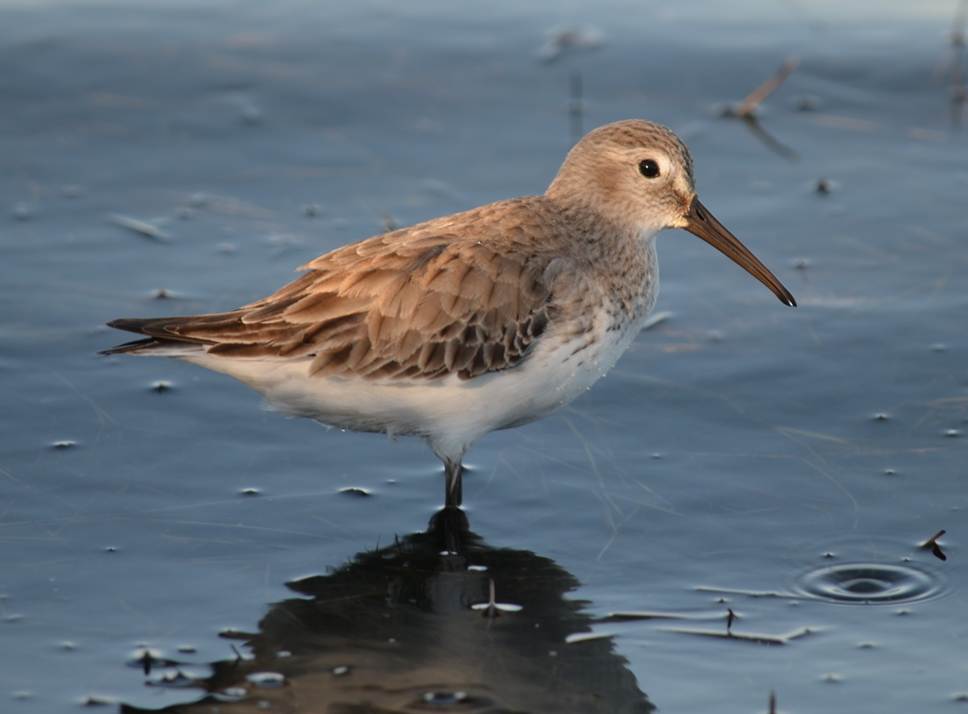
An adult dunlin in breeding plumage shows the distinctive black belly which no other similar-sized wader possesses. The winter dunlin is basically grey above and white below. Juveniles are brown above with two whitish V shapes on the back. They usually have black marks on the flanks or belly and show a strong white wingbar in flight. The legs and slightly decurved bill are black.
Taxonomy
- Kingdom
- Animalia
- Phylum
- Chordata
- Class
- Bird
- Family
- Charadriidae
- Genus
- Calidris
- Species
- alpina
Habitat
Breeds in arctic and subarctic climates. Winters across coastal mudflats or sandy beaches.
Diet
Insects form the main part of the dunlin's diet on the nesting grounds; it eats molluscs, worms and crustaceans in coastal areas.
Behavior
The dunlin is highly gregarious in winter, sometimes forming large flocks. Large numbers can often be seen swirling in synchronized flight on stop-overs during migration or on their winter habitat. This bird is one of the most common waders throughout its breeding and wintering ranges, and it is the species with which other waders tend to be compared. Dunlin are small migratory waders, however they show strong philopatry with individuals of the Southern Dunlin (Calidris alpina schinzii) in Sweden and Finland returning to, or very close to, their natal patches. Habitat fragmentation has reduced the availability of habitat patches to these birds through reducing patch size and increasing patch isolation. This reduced connectivity between patches has reduced the movements of Dunlin leaving them more susceptible to inbreeding in these locations. Future management for the conservation of Southern Dunlin should include increasing the connectivity between habitat patches.
Hunting
More information is needed.
Conservation Status
Listed as Least Concern by IUCN.