
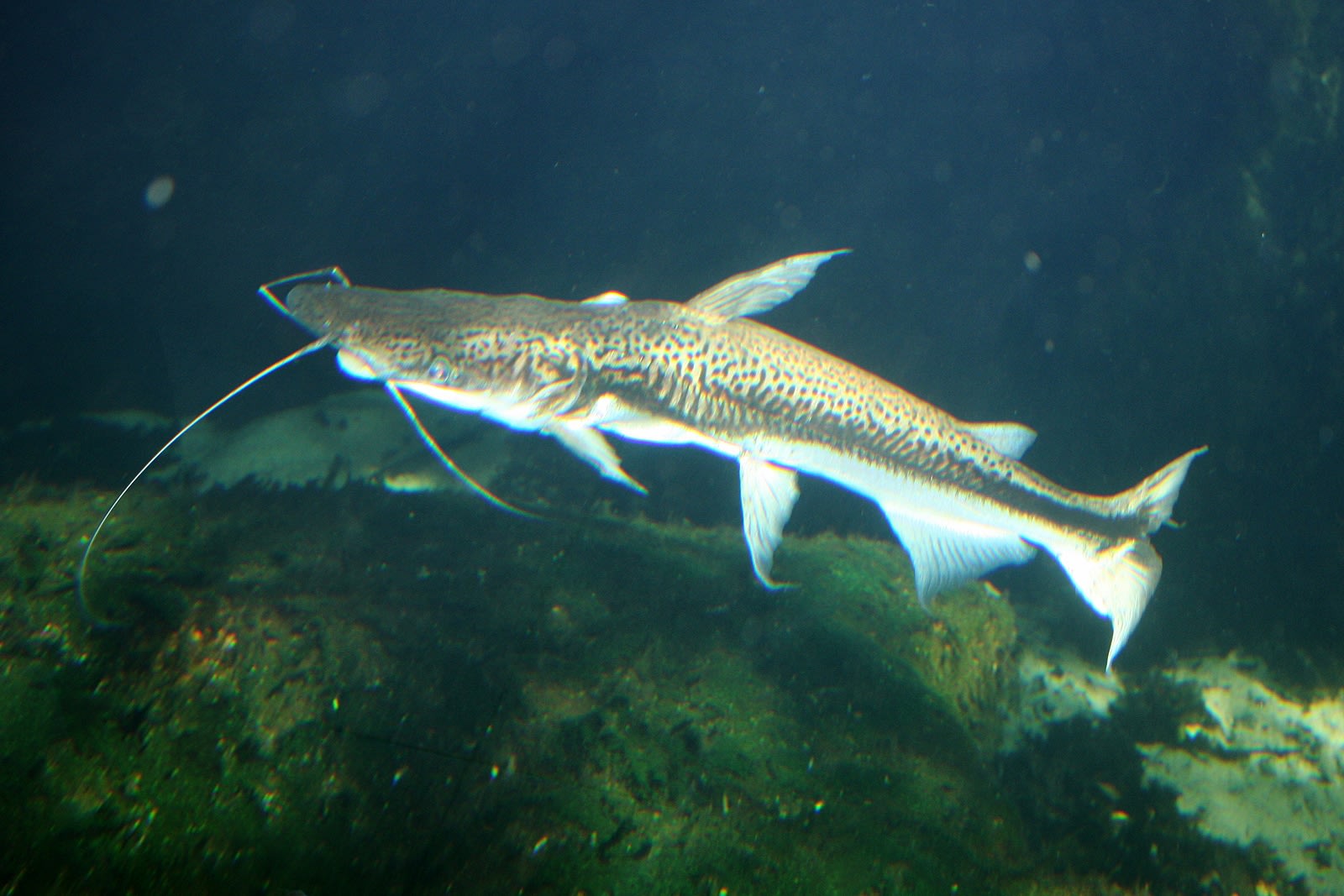
Taxonomy
- Kingdom
- Animalia
- Phylum
- Chordata
- Class
- Actinopterygii
- Order
- Perciformes
- Family
- Pimelodidae
- Genus
- Sorubim
- Species
- lima
Habitat
The Duckbill catfish inhabits large river systems in South America, including the Amazon, Orinoco, and Paraná basins, preferring deep, slow-moving waters with sandy or muddy bottoms. It thrives in freshwater environments with abundant vegetation and submerged structures for cover. These fish are often found in main river channels and flooded areas during the wet season.
Diet
The Duckbill catfish is a carnivorous predator that primarily feeds on smaller fish, crustaceans, and insects. It uses its sensitive barbels to detect and capture prey in low-visibility waters, often employing an ambush strategy. Feeding activity peaks at night when the fish is most active.
Behavior
The Duckbill catfish is primarily nocturnal, spending daylight hours hidden in crevices, under logs, or in deep riverbed holes to avoid predators. It is generally solitary and territorial, particularly in feeding and breeding areas, but may form loose groups in high-food environments. This species exhibits ambush predation, remaining still before striking at prey with quick bursts of speed.
Fishing
Anglers targeting the Duckbill catfish in South America's iconic river systems like the Amazon, Orinoco, and Paraná can use effective techniques such as bottom fishing with live bait or jigging to imitate their prey, capitalizing on the fish's nocturnal ambush behavior for exciting catches. Opt for medium-heavy rods with 10-20 lb test lines and sturdy reels to manage their strong, darting fights in deep waters; recommended baits include live minnows, shrimp, or vibrating lures that attract in low-visibility conditions. The best season aligns with the rainy period from November to March when fish are more active and accessible in flooded areas, with prime fishing times at night in slow-moving, deep channels featuring muddy or sandy bottoms and submerged vegetation for cover. Typical sizes reach up to 100 cm (39 inches) and 3 lbs 4 oz, supporting the thrill of the sport without specific IGFA records noted. Recreational fishing for this species contributes to conservation by generating funds through angler licenses and taxes, which support habitat protection and stocking programs in these biodiverse waterways, ensuring healthy populations and sustainable practices for future anglers.
Conservation Status
Listed as Not Evaluated by IUCN.