
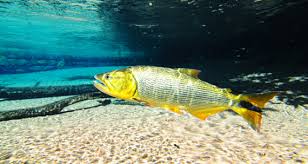
Taxonomy
- Kingdom
- Animalia
- Phylum
- Chordata
- Class
- Actinopterygii
- Order
- Cypriniformes
- Family
- Characidae
- Genus
- Salminus
- Species
- hilarii
Habitat
Dourado primarily inhabit large, fast-flowing rivers and tributaries in South America, such as the Paraná, Amazon, and Orinoco basins, preferring areas with rocky substrates, deep pools, and strong currents. They are less common in stagnant waters or lakes, thriving in warm, freshwater environments with ample cover from vegetation or submerged logs.
Diet
Dourado are carnivorous predators that primarily feed on smaller fish like tetras and minnows, as well as crustaceans and insects. They employ ambush tactics, often striking quickly in midwater or near the surface, with peak feeding activity occurring during dawn and dusk in their river habitats.
Behavior
Dourado are typically solitary or found in small groups, exhibiting territorial behavior around feeding and spawning areas in rivers. They are diurnal hunters, actively patrolling currents and showing aggressive strikes when threatened or pursuing prey. This species is known for its powerful leaps and fights when hooked, making it a thrilling catch for anglers.
Fishing
Anglers targeting the Dourado, a thrilling sport fish in South America's fast-flowing rivers like the Paraná, Amazon, and Orinoco, should focus on aggressive techniques such as casting lures, trolling, or fly fishing to mimic its prey of smaller fish and crustaceans, with topwater plugs, spoons, or live minnows proving highly effective for triggering strikes. Use medium-heavy rods paired with strong reels and 20-30 lb test line to handle their powerful leaps and runs, ensuring you have a net and sturdy leader to land these fighters safely. The best season runs from November to March during the rainy period when they spawn and feed more actively, with dawn and dusk offering prime opportunities as they patrol deep pools, rocky substrates, and strong currents—target areas with submerged logs or vegetation for the best results. Dourado can grow up to 1 meter in length and weigh up to 4 lbs 8 oz, showcasing their impressive size for anglers; while specific IGFA records for Salminus hilarii are limited, related species highlight the potential for record catches. Conservation efforts are bolstered by catch-and-release practices, which help maintain healthy populations amid potential declines from habitat loss, with angler license fees in regions like Brazil funding essential waterway protection and stocking programs to ensure sustainable fishing for future generations.
Conservation Status
Listed as Not Evaluated by IUCN.