
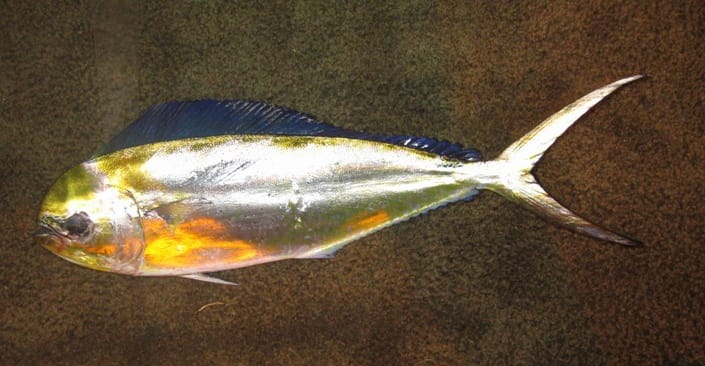
Taxonomy
- Kingdom
- Animalia
- Phylum
- Chordata
- Class
- Actinopterygii
- Order
- Istiophoriformes
- Family
- Coryphaenidae
- Genus
- Coryphaena
- Species
- equiselis
Habitat
Pompano dolphinfish inhabit pelagic, open-ocean waters in tropical and subtropical regions, often near the surface around floating debris, sargassum weeds, or structures like fish aggregating devices. They prefer warm waters above 20°C (68°F) and are found across the Atlantic, Indian, and Pacific Oceans, avoiding coastal shallows.
Diet
They primarily feed on small fish such as flying fish, mackerel, and sardines, as well as squid and crustaceans. Pompano dolphinfish are aggressive hunters that chase prey in schools using their speed, and they feed mainly during the day near the ocean surface.
Behavior
Pompano dolphinfish are highly migratory and form schools, particularly juveniles, to hunt and evade predators. They exhibit fast swimming speeds up to 50 mph and perform acrobatic jumps when hooked or feeding. These fish are curious, often approaching boats or floating objects, and show aggressive feeding behaviors in groups.
Fishing
The dolphin pompano, or pompano dolphinfish, is a prized sport fish known for its acrobatic fights and delicious flesh, supporting conservation through angler license fees that fund habitat protection and research in open-ocean environments. Target them using trolling techniques with fast retrieves near floating debris, sargassum weeds, or fish aggregating devices in pelagic tropical and subtropical waters above 20°C (68°F), as these structures concentrate schools and promote sustainable fishing practices. For tackle, use medium-heavy rods paired with 20-30 pound test line and reels with strong drag systems to handle their high-speed runs, while opting for artificial lures like skirted trolling plugs or jigs in bright colors, or live bait such as small fish, squid, or mackerel to mimic their diet of pelagic prey. The best seasons are year-round in warm regions like the Atlantic, Indian, and Pacific Oceans, with peak activity during daylight hours when they actively hunt schools of baitfish near the surface. Anglers should focus on offshore areas in the Western Central Atlantic, Eastern Indian Ocean, or Western Central Pacific for consistent catches, adhering to slot limits and bag restrictions as effective tools for maintaining healthy populations—such as those set by regional fisheries management organizations that ensure sustainable harvests. The IGFA all-tackle record stands at 39 pounds 4 ounces, caught in Costa Rica in 1998, highlighting the species' potential and the importance of catch-and-release for undersized fish to support stocking programs and protect migratory stocks, ultimately bolstering conservation efforts through regulated angling.
Conservation Status
Listed as Least Concern by IUCN.