
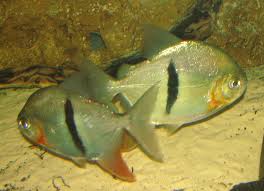
Taxonomy
- Kingdom
- Animalia
- Phylum
- Chordata
- Class
- Actinopterygii
- Order
- Siluriformes
- Family
- Serrasalmidae
- Genus
- Prosomyleus
- Species
- schomburgkii
Habitat
This species inhabits freshwater rivers, streams, and flooded forests in the Amazon Basin of South America, preferring warm, slow-moving waters with plenty of vegetation for cover. They are commonly found in Brazil, Venezuela, and Peru, often in areas like the Rio Orinoco and Rio Nanay.
Diet
Disk tetras primarily eat smaller fish, insects, crustaceans, and occasionally plant matter or carrion, using their sharp teeth to tear flesh. They are opportunistic feeders, often hunting in schools during the day when prey is most active, and can become aggressive in low-water conditions.
Behavior
Disk tetras are highly social, forming schools of up to several hundred individuals for protection and hunting. They are diurnal, actively foraging during the day and resting in vegetation at night, with territorial behavior increasing during breeding seasons. These fish exhibit aggressive feeding frenzies when blood is detected in the water.
Fishing
Targeting the disk tetra, also known as the red-bellied piranha, offers exciting recreational fishing opportunities in South America's Amazon Basin, supporting conservation through license fees and habitat protection programs that fund waterway restoration. Use effective techniques like bottom fishing with live or cut bait to capitalize on their aggressive feeding behavior, or cast small jigs and spoons to mimic prey in schools; always handle them carefully due to their sharp teeth. Recommended tackle includes a light to medium spinning rod with 10-20 lb test line, size 2-6 hooks, and a sturdy leader to prevent bite-offs, paired with baits such as small fish chunks, worms, or shiny lures that imitate insects and crustaceans. The best season is the rainy period from November to March, when water levels rise and fish are more active, targeting dawn or dusk for peak bites in warm, slow-moving waters with plenty of vegetation cover in rivers like the Rio Orinoco and Rio Nanay in Brazil, Venezuela, and Peru. Adults typically reach 20-30 cm and up to 1 lb 15 oz, with no specific IGFA all-tackle record noted, but local catches contribute to angler data for population monitoring. Conservation efforts, including catch-and-release practices and slot limits in some areas, ensure healthy populations by allowing breeders to thrive, with angler-funded programs in the region protecting against habitat loss from deforestation, making every fishing trip a step toward preserving these vibrant ecosystems.
Conservation Status
The IUCN classifies the red-bellied piranha as Least Concern, with a stable population trend, though habitat loss from deforestation and pollution poses potential threats in some areas.