
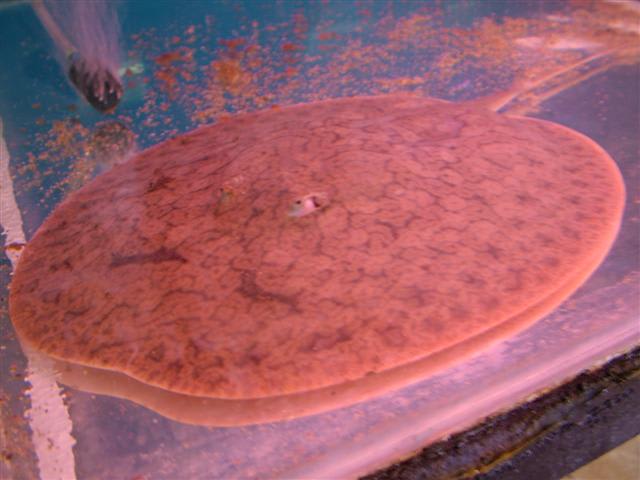
Taxonomy
- Kingdom
- Animalia
- Phylum
- Chordata
- Class
- Chondrichthyes
- Order
- Rajiformes
- Family
- Potamotrygonidae
- Genus
- Paratrygon
- Species
- aiereba
Habitat
This species inhabits large freshwater rivers and floodplains in the Amazon basin, such as the Rio Negro and Orinoco, preferring slow-moving, murky waters with sandy or muddy bottoms. It thrives in warm, tropical environments with abundant vegetation for cover. These habitats are typically in lowland areas of South America, including Brazil, Peru, and Venezuela.
Diet
The discus ray primarily feeds on benthic invertebrates like worms, crustaceans, and mollusks, which it detects using electroreceptors. It also consumes small fish and insects, often foraging at night by stirring up the substrate. Feeding behavior involves lying in wait on the river bottom before striking prey.
Behavior
Discus rays are generally solitary and nocturnal, spending daylight hours buried in the sediment to avoid detection. They exhibit territorial behavior, defending feeding areas from intruders, and use their venomous tail spine for defense when threatened. In the wild, they are known for slow, graceful movements along riverbeds.
Conservation Status
Listed as Data Deficient by IUCN.