
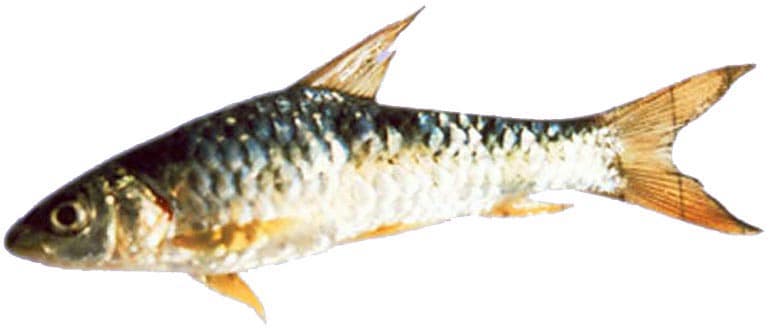
Taxonomy
- Kingdom
- Animalia
- Phylum
- Chordata
- Class
- Actinopterygii
- Order
- Neopterygii
- Family
- Cyprinidae
- Genus
- Tor
- Species
- khudree
Habitat
Deccan mahseer primarily inhabits fast-flowing rivers and streams in hilly and mountainous regions, preferring clear, well-oxygenated waters with rocky or gravelly substrates. They are commonly found in the Western Ghats of India and rivers in Sri Lanka, avoiding stagnant or polluted areas.
Diet
Deccan mahseer are omnivorous, feeding on insects, crustaceans, smaller fish, and plant matter such as algae and fruits. They primarily forage along the river bottom during dawn and dusk, using their barbels to detect food in murky waters.
Behavior
Deccan mahseer are generally solitary or form small groups, becoming territorial during spawning periods. They are most active in cooler water temperatures, often resting in deeper pools during the day and feeding at night. This species is known for its powerful bursts of speed and acrobatic jumps when hooked by anglers.
Fishing
The Deccan mahseer is a prized sport fish in India's fast-flowing rivers, renowned for its powerful fights and acrobatic jumps, making it a key species for conservation through regulated angling that funds habitat protection. Target them using techniques like fly fishing with streamers or nymphs, or spinning with crankbaits and spoons to mimic their natural prey such as insects and small fish; bottom bait fishing with live baits like earthworms, shrimp, or small minnows also works well in deeper pools. Use sturdy medium-heavy rods (7-9 feet) with strong reels featuring a reliable drag system, 10-20 lb test line, and hooks sized 1/0 to 4/0 to handle their bursts of speed in swift currents. The best season is from October to February during cooler, clearer post-monsoon months, with prime fishing times at dawn and dusk when they actively forage along rocky substrates; focus on well-oxygenated rivers in the Western Ghats, such as the Cauvery River in Karnataka or Andhra Pradesh, where they inhabit rapids and deep pools. Record sizes include IGFA all-tackle world records exceeding 13 lbs 2 oz and lengths over 1.8 meters, showcasing their impressive growth potential. Conservation efforts, supported by angler license fees, include catch-and-release practices and seasonal closures during the June to September spawning period as effective management tools to maintain healthy populations and combat their Endangered status on the IUCN Red List, ensuring sustainable fishing contributes to waterway restoration in India and Sri Lanka.
Conservation Status
Listed as Endangered by IUCN.