
Taxonomy
- Kingdom
- Animalia
- Phylum
- Chordata
- Class
- Actinopterygii
- Order
- Perciformes
- Family
- Salmonidae
- Genus
- Oncorhynchus
- Species
- clarkii
Habitat
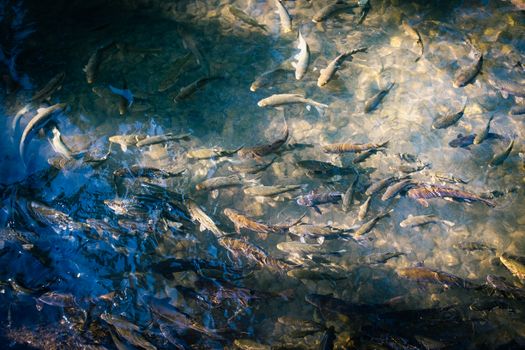
Cutthroat trout primarily inhabit cold, clear streams, rivers, and lakes in western North America, preferring well-oxygenated waters with gravel or rocky substrates. They are found from high mountain elevations down to coastal regions, thriving in areas with ample cover like undercut banks or fallen logs. Geographic preferences include the Rocky Mountains and Pacific Coast drainages, where water temperatures remain below 68°F.
Diet
Juvenile cutthroat trout feed on aquatic insects, plankton, and small crustaceans, while adults consume a wider variety including insects, fish eggs, smaller fish, and occasionally amphibians or terrestrial insects. They are opportunistic predators, often feeding near the surface during dawn and dusk when insects are active. Feeding behavior involves quick strikes and hiding in currents to ambush prey.
Behavior
Cutthroat trout are generally solitary or form small groups in larger waters, becoming more territorial during spawning seasons when they defend redds aggressively. They are most active in cooler water temperatures, often resting in deeper pools during the day and feeding in riffles at night. Notable behaviors include migratory patterns in some subspecies, such as moving from lakes to streams for spawning, and their ability to leap obstacles in rivers.
Fishing
Cutthroat trout are a premier sport fish in western North America, offering exciting challenges for anglers while supporting conservation through license fees that fund habitat restoration and stocking programs. Employ proven techniques like fly fishing with dry flies, nymphs, or streamers to mimic insects, or use spinning gear with lightweight lures for precision casting in fast currents. Recommended tackle includes a 5-7 weight fly rod with a floating line and tippet sizes of 4-6X, or a 6-8 foot light spinning rod with 4-8 lb test monofilament line; effective baits and lures are worms, salmon eggs, Panther Martin spinners, or Mepps spinners to entice their opportunistic feeding on insects and small fish. The best seasons are spring and fall during spawning migrations, with peak activity at dawn and dusk when they feed near the surface in cooler waters. Target them in cold, clear streams, rivers, and lakes across regions like Montana, Idaho, and Alaska's Prince William Sound, focusing on riffles, deep pools, undercut banks, and gravel substrates for the best strikes. The IGFA all-tackle world record is 41 pounds, landed in Alaska, highlighting their impressive size potential. Special regulations, such as slot limits and catch-and-release requirements in many areas, serve as effective management tools to maintain sustainable populations, ensuring these fish continue to thrive and contribute to waterway protection through angler-supported initiatives.
Conservation Status
Listed as Not Evaluated by IUCN.