
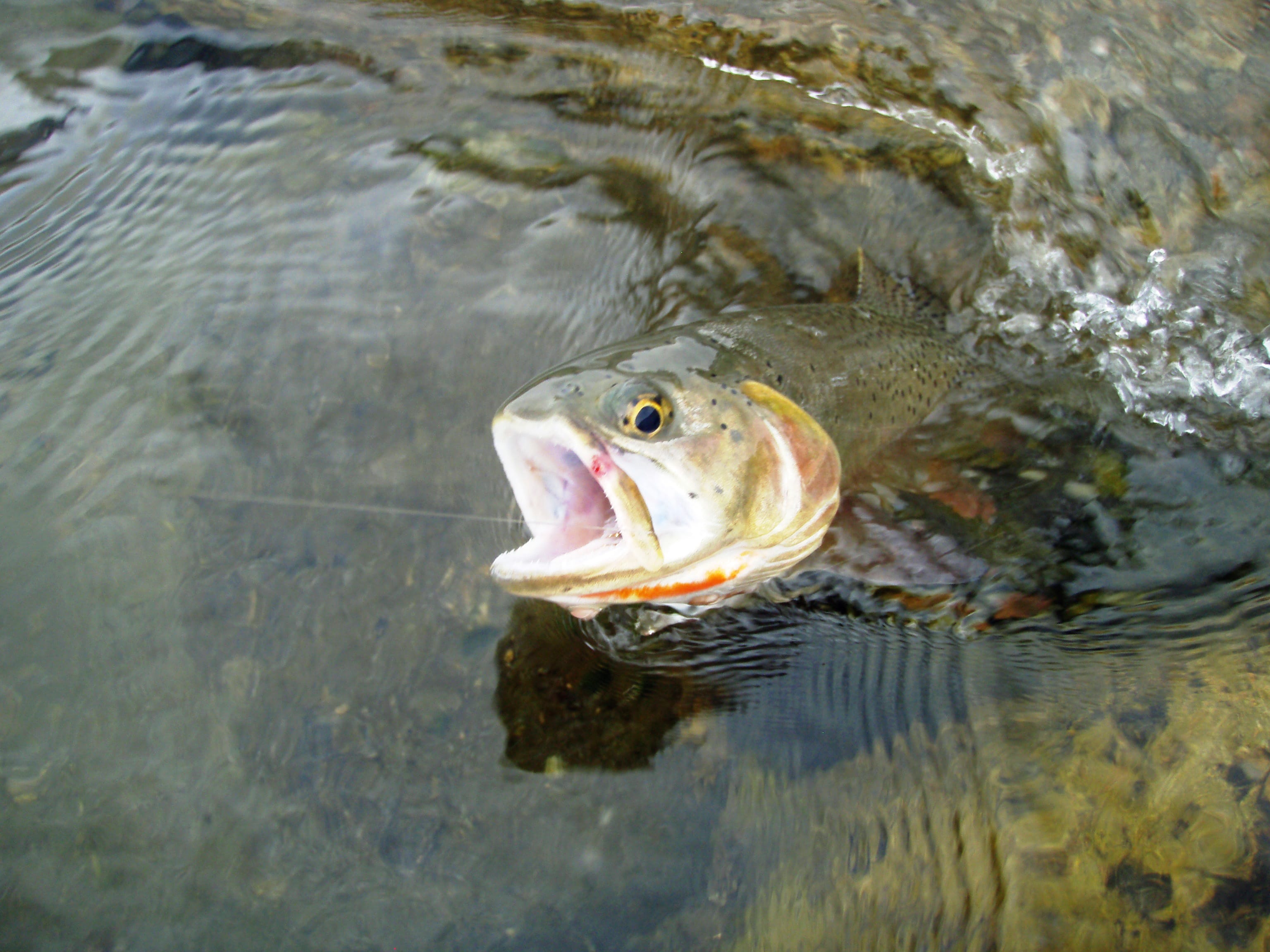
Taxonomy
- Kingdom
- Animalia
- Phylum
- Chordata
- Class
- Actinopterygii
- Order
- Perciformes
- Family
- Salmonidae
- Genus
- Oncorhynchus
- Species
- clarki x mykiss
Habitat
Cutbow trout inhabit cold, clear rivers, streams, and lakes in mountainous regions of western North America, particularly in Idaho and surrounding areas. They prefer well-oxygenated waters with gravel substrates for spawning and rocky structures for cover. These fish thrive in both flowing and still waters, often at elevations above 1,000 feet.
Diet
Cutbow trout primarily eat aquatic insects like mayflies and caddisflies, as well as small fish, crustaceans, and occasionally terrestrial insects that fall into the water. They are opportunistic feeders, often hunting during dawn and dusk when prey is most active. Feeding behavior includes lying in wait near structures before darting to capture food.
Behavior
Cutbow trout are generally solitary but may form loose schools in larger lakes; they are most active in cooler water temperatures, typically dawn and dusk. They exhibit territorial behavior during spawning, aggressively defending redds in gravel beds. These fish are known for their strong fighting ability when hooked, making them popular among anglers, and they often migrate between rivers and lakes.
Fishing
Cutbow trout, a hybrid of cutthroat and rainbow trout, provide thrilling angling experiences in Idaho's cold, clear rivers, streams, and lakes, supporting conservation through license fees that fund habitat restoration and stocking programs. Target them with fly fishing techniques like nymphing or dry-fly casting, or use light spinning gear for trolling with small spinners and spoons, focusing on structures like rocky areas and gravel substrates where they lie in wait for prey. Recommended tackle includes a 6-9 foot rod with 4-8 lb test line, paired with size 10-14 flies, inline spinners, or live baits such as worms and insects to mimic their diet of aquatic bugs and small fish; always opt for barbless hooks to promote catch-and-release success. The best seasons are spring and fall, with peak activity at dawn and dusk in well-oxygenated waters above 1,000 feet elevation, where cooler temperatures enhance feeding. In many Idaho regions, effective management tools like slot limits (often 12-20 inches) and catch-and-release policies help sustain populations, preventing overharvest and allowing fish to reach maturity, while angler-funded programs combat threats like hybridization and habitat loss. The IGFA all-tackle world record stands at 34 pounds 11 ounces, highlighting their potential size and the importance of responsible fishing practices.
Conservation Status
Cutbow trout, as a hybrid, are not specifically assessed by the IUCN, but their parent species face threats; for example, cutthroat trout are listed as least concern overall but vulnerable in some regions due to habitat loss and hybridization. Major threats include competition from introduced species, dam construction, and water pollution, contributing to declining populations in certain areas.