
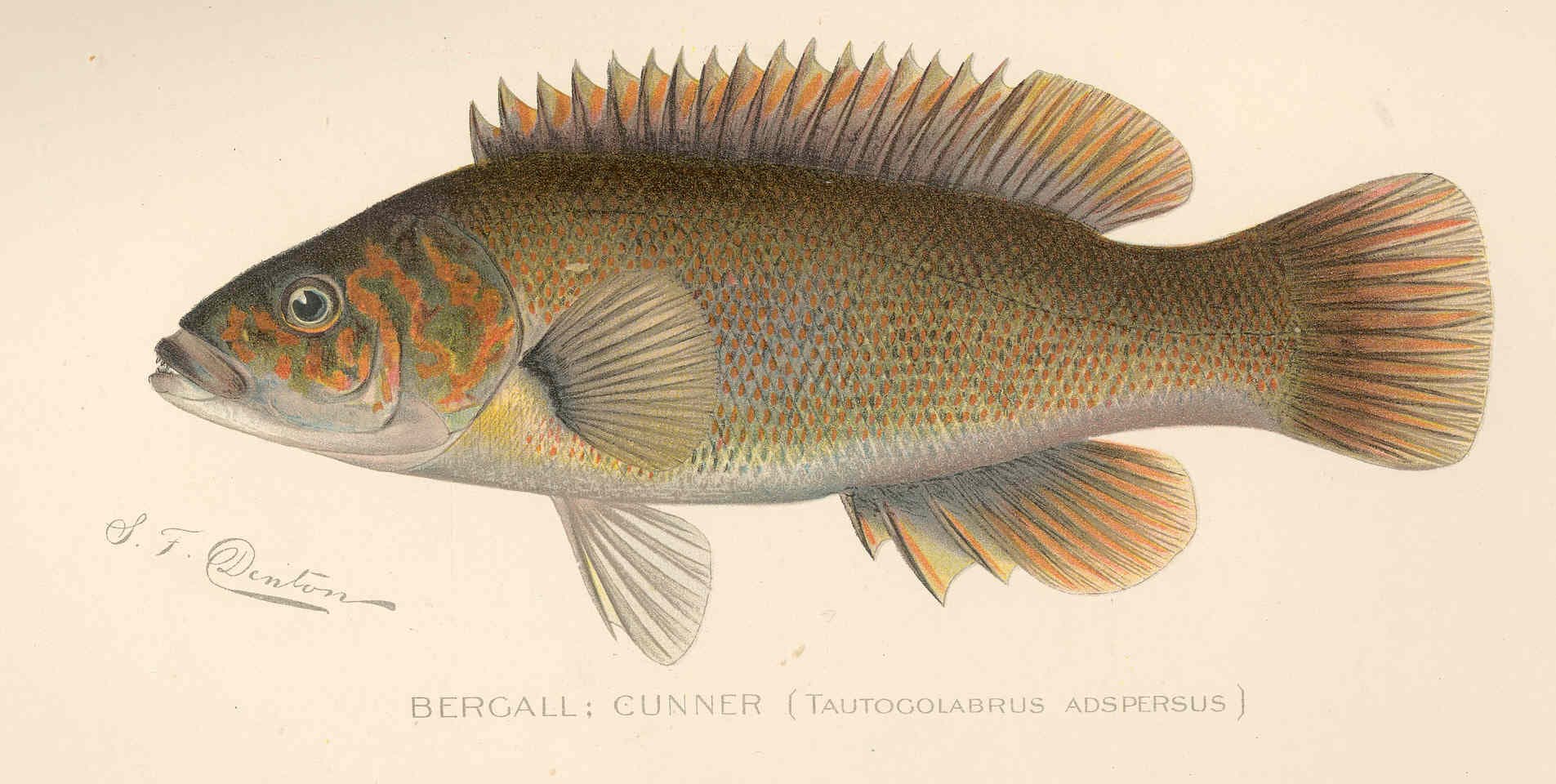
Taxonomy
- Kingdom
- Animalia
- Phylum
- Chordata
- Class
- Actinopterygii
- Order
- Perciformes
- Family
- Labridae
- Genus
- Tautogolabrus
- Species
- adspersus
Habitat
Cunners inhabit shallow coastal waters of the Northwest Atlantic, from Labrador to South Carolina, preferring rocky substrates, eelgrass beds, and areas around piers and jetties. They are commonly found in depths of 1 to 20 meters, where they seek shelter among rocks and algae.
Diet
Cunners are opportunistic bottom-feeders that primarily consume small crustaceans like crabs and shrimp, as well as mollusks, worms, and occasionally small fish or algae. They forage during the day by rooting through substrates, using their strong jaws to crush shells.
Behavior
Cunners are generally solitary or found in small groups and are territorial around their hiding spots in rocky areas. They are diurnal, active during the day for feeding and resting in crevices at night, and exhibit quick, darting movements when threatened.
Fishing
Cunners, a hardy species found along the Atlantic Coast from Labrador to South Carolina, provide exciting recreational fishing opportunities in shallow coastal waters, supporting conservation through angler license fees that fund habitat protection and population monitoring. Target them using bottom fishing techniques, such as dropping a simple rig with a sinker and a single or double hook setup near rocky substrates, eelgrass beds, piers, or jetties in depths of 1 to 20 meters, where they hide and feed opportunistically. Opt for light to medium spinning tackle with 10-20 pound test line, a 6-9 foot rod, and size 1-4 hooks baited with effective options like live shrimp, crabs, sandworms, or bloodworms to mimic their diet of crustaceans and mollusks; artificial lures that imitate small prey can also work in clear waters. The prime seasons are spring through fall, with the best bites occurring during daylight hours when cunners are most active foraging. While specific regulations vary by region, such as slot limits or catch-and-release in areas like Chesapeake Bay, these measures ensure sustainable populations and align with angler-funded programs that promote waterway health. The IGFA all-tackle world record stands at 3 pounds 8 ounces, highlighting the potential for memorable catches while practicing responsible angling to maintain their stable, Least Concern status.
Conservation Status
Listed as Least Concern by IUCN.