
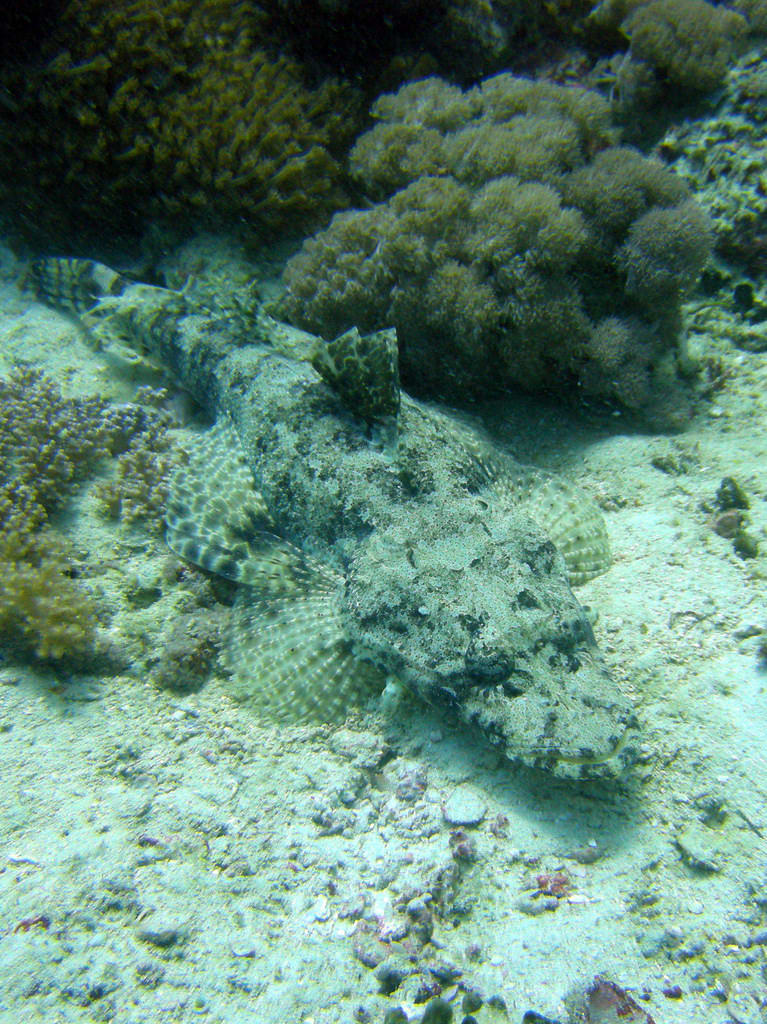
Taxonomy
- Kingdom
- Animalia
- Phylum
- Chordata
- Class
- Actinopterygii
- Order
- Perciformes
- Family
- Platycephalidae
- Genus
- Cociella
- Species
- crocodila
Habitat
Crocodile flatheads inhabit coastal waters, estuaries, and shallow seas with sandy or muddy bottoms in the Indo-Pacific region. They prefer depths from shallow intertidal zones to about 100 meters, often burrowing into the substrate for protection. Geographic preferences include areas around India, Japan, and the eastern Indian Ocean.
Diet
This species primarily feeds on small fish, crustaceans, and mollusks, using its ambush tactics to capture prey. It lies partially buried in the sediment and strikes quickly when food approaches, typically hunting during low light conditions like dawn or dusk. Feeding behavior is opportunistic, taking advantage of tidal movements to access prey.
Behavior
Crocodile flatheads are solitary and territorial, often burying themselves in sand or mud during the day to avoid predators and hunt. They exhibit nocturnal activity patterns, emerging at night to forage, and are known for their excellent camouflage and ambush predation strategies. This species is generally sedentary, with limited migration except for reproductive purposes.
Fishing
Target the crocodile flathead, a stealthy ambush predator in the Indo-Pacific, using bottom fishing techniques for the best results; cast weighted rigs with live bait like small fish or shrimp, or soft plastic lures that mimic crustaceans, to entice strikes from their buried positions in sandy or muddy substrates. Use light to medium spinning tackle with 10-20 lb test line, a sensitive rod for detecting subtle bites, and hooks sized 1/0 to 3/0 to handle their toothy mouths without damaging the fish for catch-and-release. The prime season runs from spring to summer in tropical regions like India, Japan, and the eastern Indian Ocean, with dawn and dusk being optimal times when they actively hunt; focus on shallow coastal waters, estuaries, and depths up to 100 meters where they burrow for cover. These fish typically reach up to 50 cm and 2 lbs 5 oz, with no specific IGFA record noted, but anglers can aim for personal bests while supporting conservation through license fees that fund habitat restoration in these areas. As a species listed as Least Concern by the IUCN, crocodile flatheads benefit from slot limits and catch-and-release practices in managed fisheries, which help maintain healthy populations and demonstrate how recreational fishing contributes to aquatic conservation efforts across the Indian and Pacific Oceans.
Conservation Status
Listed as Least Concern by IUCN.