
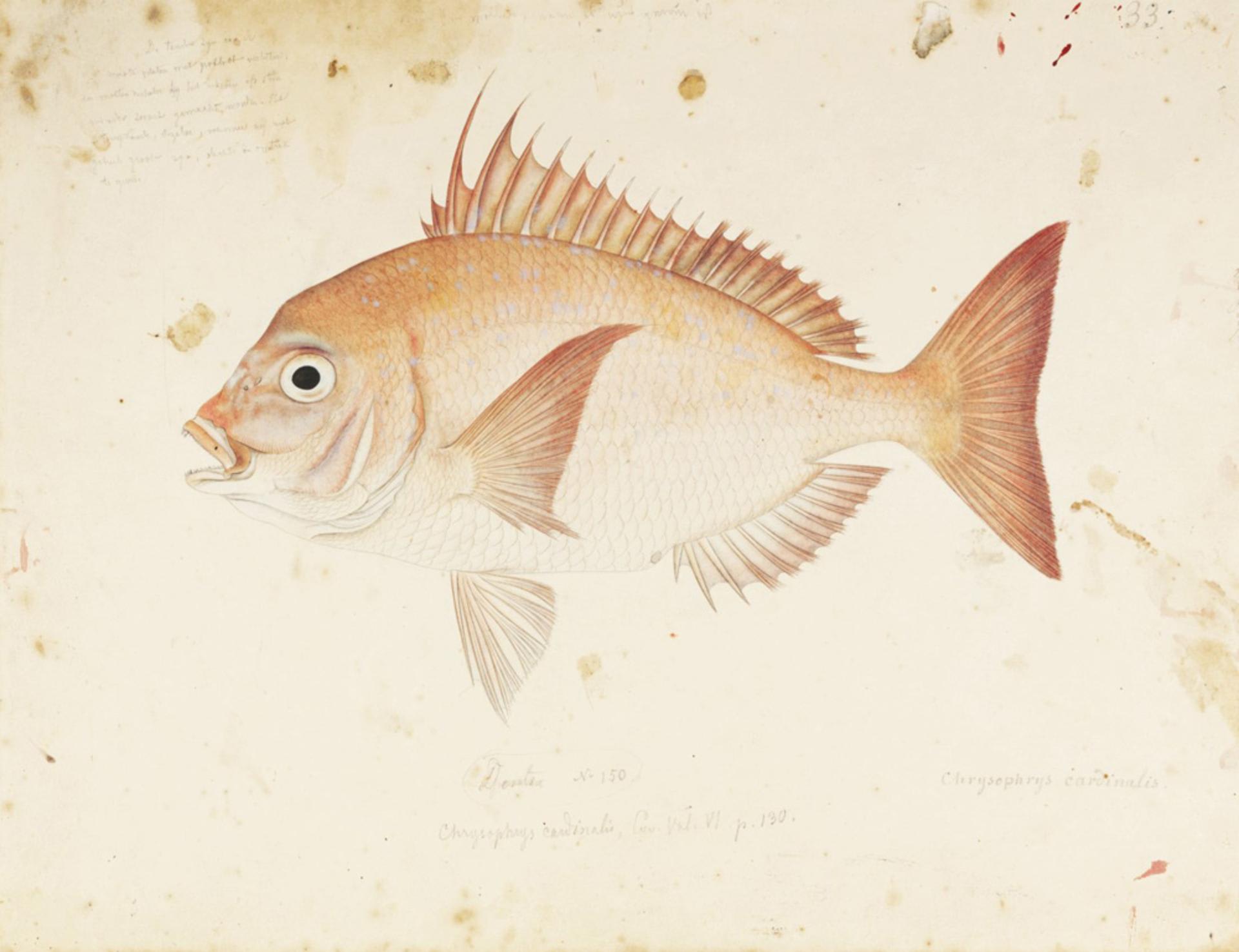
Taxonomy
- Kingdom
- Animalia
- Phylum
- Chordata
- Class
- Actinopterygii
- Order
- Siluriformes
- Family
- Sparidae
- Genus
- Evynnis
- Species
- japonica
Habitat
Crimson seabream inhabit coastal waters of the Western Pacific, preferring rocky reefs, sandy bottoms, and areas with moderate currents at depths of 10 to 200 meters. They are commonly found around Japan, Korea, China, and Taiwan, often in warmer temperate to subtropical regions.
Diet
Crimson seabream primarily feed on small crustaceans, mollusks, and polychaete worms, with occasional small fish. They exhibit diurnal feeding behavior, actively foraging during the day over reefs and sandy substrates.
Behavior
Crimson seabream are schooling fish that form loose groups for protection and feeding, often seen swimming near the bottom during the day. They are territorial around prime feeding spots and become more active in warmer water temperatures. This species is generally wary of predators, quickly darting into crevices for cover.
Fishing
Anglers targeting the crimson seabream, a popular sport fish in the Western Pacific, should focus on bottom fishing techniques using light to medium tackle, such as a 7-9 foot rod with 10-20 lb test line and a sturdy reel to handle their strong runs in currents; effective baits include live shrimp, crabs, or worms, while lures like jigs and soft plastics that mimic small crustaceans work well for enticing strikes. The best season is summer when water temperatures rise and spawning activity peaks, with prime fishing times during the day when these diurnal feeders are most active over rocky reefs and sandy bottoms at depths of 10 to 200 meters in areas like Japan, Korea, Taiwan, and China—target structure-rich zones with moderate currents for the best results. Record sizes include fish up to 50 cm in length and weighing 2 lbs 10 oz, highlighting the thrill of this species for recreational anglers. Conservation-wise, crimson seabream benefit from angler-funded programs through fishing licenses and taxes that support habitat restoration in the Pacific, promoting catch-and-release practices and slot limits in some regions as effective tools to maintain stable populations, ensuring sustainable fishing aligns with their IUCN Least Concern status.
Conservation Status
Listed as Least Concern by IUCN.