
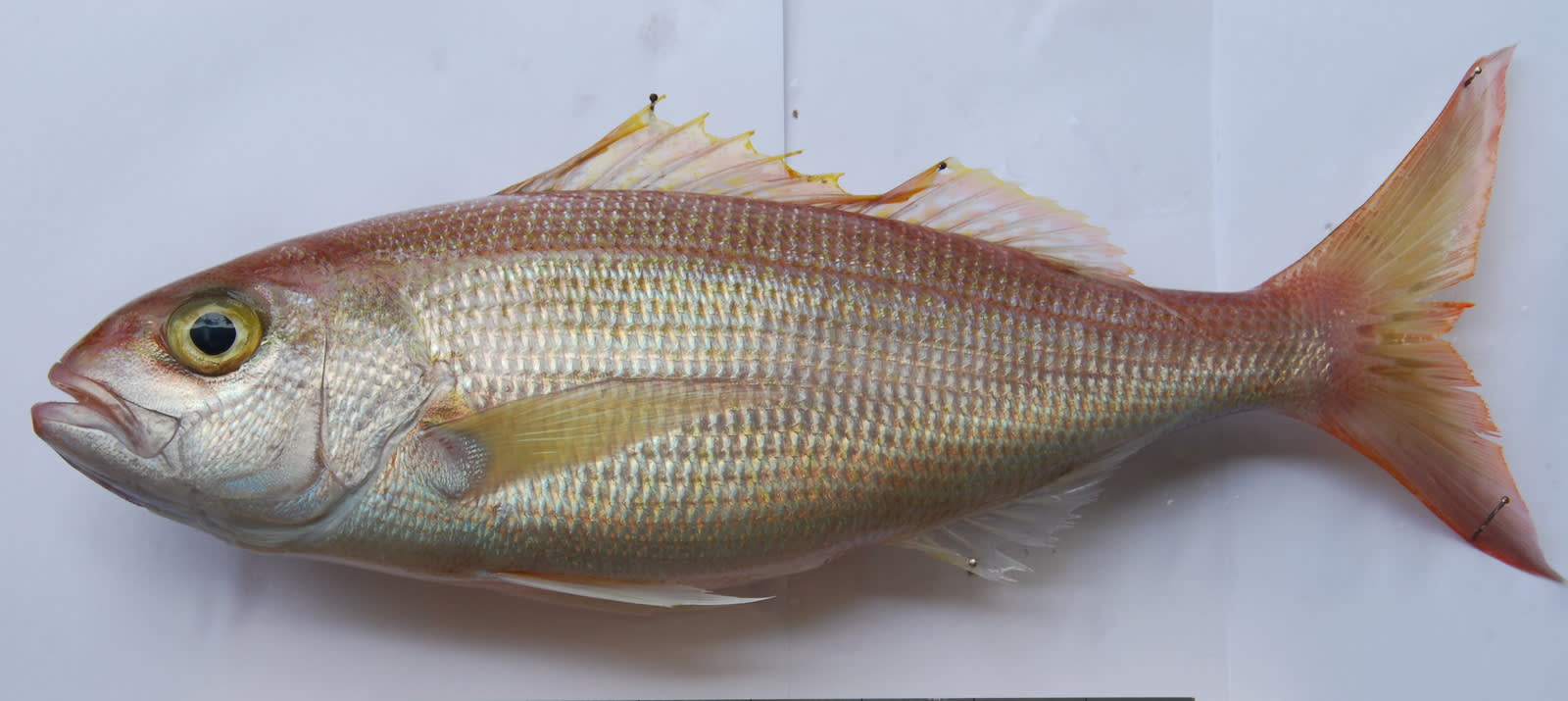
Taxonomy
- Kingdom
- Animalia
- Phylum
- Chordata
- Class
- Actinopterygii
- Order
- Perciformes
- Family
- Lutjanidae
- Genus
- Pristipomoides
- Species
- filamentosus
Habitat
Crimson jobfish primarily inhabit deep waters of the Indo-Pacific, favoring coral reefs, rocky substrates, and areas with strong currents at depths of 50 to 400 meters. They are often found in regions with abundant structure for cover, such as drop-offs and seamounts. Geographic preferences include the Indian and Pacific Oceans, as noted in various tropical and subtropical areas.
Diet
Crimson jobfish mainly consume smaller fish, squid, and crustaceans, which they hunt in schools. They exhibit ambush feeding behavior during the day, patrolling reef edges and using the terrain for surprise attacks. Feeding activity peaks in the morning and late afternoon when prey is most abundant.
Behavior
Crimson jobfish are schooling fish that form groups for protection and coordinated hunting, often migrating to follow food sources. They are diurnal, active during the day and resting in deeper waters at night, with territorial displays around feeding areas. These fish are generally wary of threats, making them challenging to approach in the wild.
Fishing
Anglers targeting the Crimson jobfish, a prized snapper species in the Indo-Pacific, should focus on deep-water techniques like bottom fishing, trolling, or vertical jigging to effectively reach their habitats in coral reefs, rocky substrates, and drop-offs at depths of 50 to 400 meters, particularly around seamounts in locations such as the Indian Ocean, Western Pacific, or areas like Australia and American Samoa; use heavy-duty tackle including sturdy rods with 30-50 lb test line, strong reels, and circle hooks to handle their powerful runs, paired with baits like live squid, small fish, or crustaceans, or metal jigs and soft plastics that mimic their prey for better strikes. The best seasons are during warmer months when spawning aggregations occur, with peak activity in the morning and late afternoon when feeding is most intense; always check local regulations, which serve as effective management tools to sustain populations, such as size or bag limits in certain regions to support angler-funded conservation programs that protect these waterways and ensure stable stocks. The IGFA all-tackle world record stands at 19 pounds 6 ounces, highlighting the thrill of this sport fish, and practicing catch-and-release for smaller individuals contributes to maintaining healthy populations, as Crimson jobfish are listed as Least Concern by the IUCN, underscoring how recreational fishing funds habitat restoration and conservation efforts across their range.
Conservation Status
Listed as Least Concern by IUCN.