
Overview
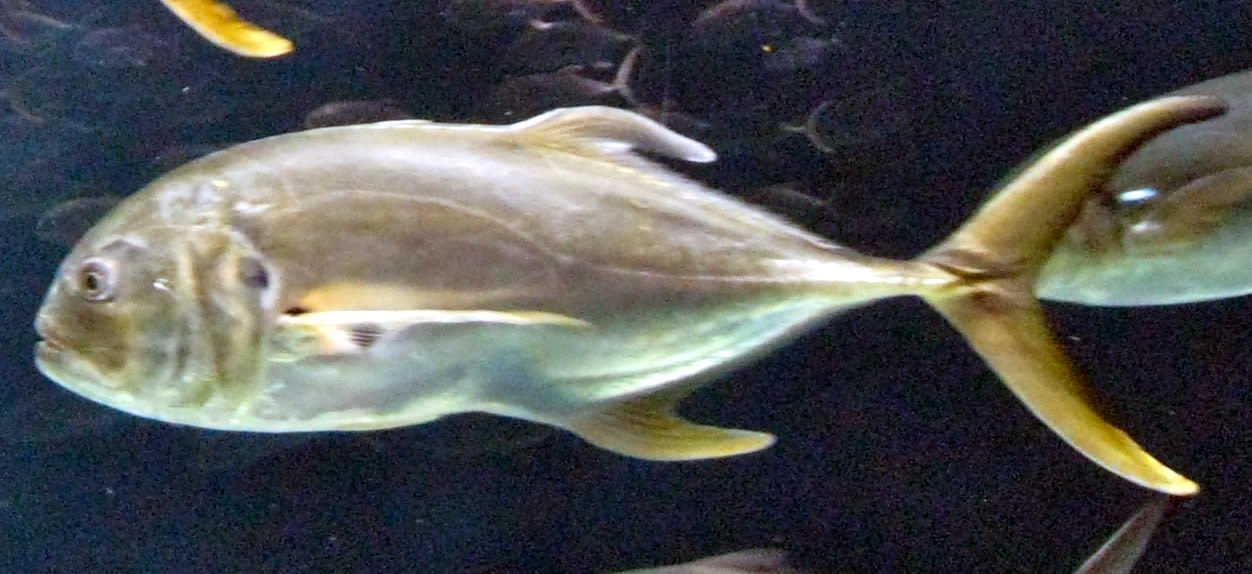
There is a rounded black spot at the lower base of the pectoral fin of the crevalle jack that is found in no other jacks in the area. There is also a distinct, vertically elongate black spot on the operculum. Enlarged scales or scutes, numbering about 30, extend in a line to the base of the tail fin. The similar horse-eye jack has no pectoral fin spot and 26-35 scutes.
Taxonomy
- Kingdom
- Animalia
- Phylum
- Chordata
- Class
- Actinopterygii
- Order
- Cichliformes
- Family
- Carangidae
- Genus
- Caranx
- Species
- hippos
Habitat
The Crevalle Jack is the Common Jack of in shore oceanic waters. The species apparently can tolerate a wide range of salinities and occurs around off shore reefs, in coastal waters, harbors and protected bays, over highly saline shallow flats, in brackish waters at river mouths, and has even been known to travel up coastal rivers.
Diet
A voracious predator, it feeds primarily on smaller fishes, which it often chases onto beaches or against seawalls. The Crevalle Jack also feeds on shrimp and other invertebrates and on garbage dumped from boats.
Behavior
Crevalle jacks are highly social, often forming large schools that can number in the hundreds, especially in open waters or around reefs. They are primarily diurnal, actively hunting during the day and resting in deeper waters at night, with aggressive feeding behaviors that include chasing prey into shallow areas. These fish can be territorial around food sources, sometimes displaying rapid bursts of speed to defend their space.
Fishing
This superb light tackle species can be taken by spinning, fly fishing, trolling, or surfcasting. Lures should be retrieved at a fast pace without pausing or stopping as jacks tend to lose interest in anything that doesn't act normally. Most jacks are not highly valued as food, though they are edible. The small fish taste best; larger specimens can be dark and tasteless. Bleeding the fish may improve the taste. Jacks are among the many species of tropical fishes, which have been implicated in ciguatera poisonings.
Conservation Status
Listed as Least Concern by IUCN.