
Overview
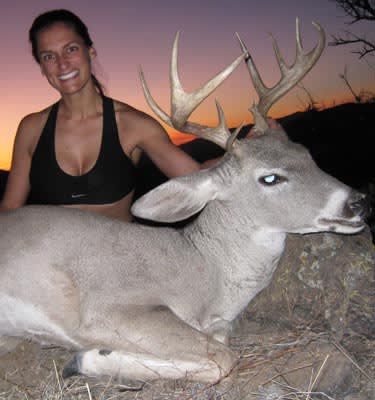
One of the smaller whitetails. Ears and tail are disproportionately long for the body size. The coloration is lighter, as is usual in desert animals, varying from fawn in summer to grayish in winter. Mature bucks normally have four points to a side including the brow tines.
Taxonomy
- Kingdom
- Animalia
- Phylum
- Chordata
- Class
- Mammal
- Order
- Artiodactyla
- Family
- Cervidae
- Genus
- Odocoileus
- Species
- Odocoileus virginianus
Habitat
Desert regions, especially hills and mountains between 4,000-8,000 feet (1,200-2,400 m) elevation, usually with scrub oak and high grassy basins. Distribution- This subspecies is isolated from other whitetails in most of the United States, but comes into contact with other whitetails in Mexico and New Mexico. United States: Arizona and the western one-half of New Mexico (specifically west of a line running through Albuquerque and parallel to the western state line of New Mexico. Mexico: Sonora and Durango states, and Chihuahua state municipalities of: Allende, Aquiles Serdán, Ascención, Bachiniva, Balleza, Batopilas, Bocoyna, Buenaventura, Carichi, Casas Grandes, Coronado, Cuauhtémoc, Cusihuiriachi, Chinipas, Dr. Belisario Domínguez, Galeana, Santa Isabel, Gómez Farías, Gran Morelos, Guachochi, Guadalupe y Calvo, Guazapares, Guerrero, Huejotitan, Ignacio Zaragoza, Janos, Madera, Mahuarichi, Matachi, Matamoros, Morelos, Moris, Namiquipa, Nonoava, Nuevo Casas Grandes, Ocampo, Riva Palacio, Rosario, San Francisco de Borja, San Francisco del Oro, Santa Bárbara, Satevó, Temosachi, El Tule, Urique, Uruachi and Valle de Zaragoza.
Diet
Coues deer forage in thickets of acacia, manzanita, mesquite and scrub oak. The deer’s diet also includes the fruit of cacti, Ceanothus, mountain mahogany and various forbs and grasses.
Behavior
Extremely cautious and wary animals with highly developed senses of sight, smell, and hearing. When threatened with danger, they will often attempt to quietly sneak away. If seriously frightened however, a whitetail deer will often utter a loud, snorting or blowing sound, and then quickly run away while raising the tail upwards like a flag, exposing the white underneath as a visual alarm to other deer nearby.
Hunting
This subspecies inhabits a unique habitat compared to other white-tailed subspecies, with much greater emphasis on spot and stalk, backpack, and glassing methods due to the open and arid climates in which they exist.
Conservation Status
The species as a whole is listed as Least Concern by IUCN.