
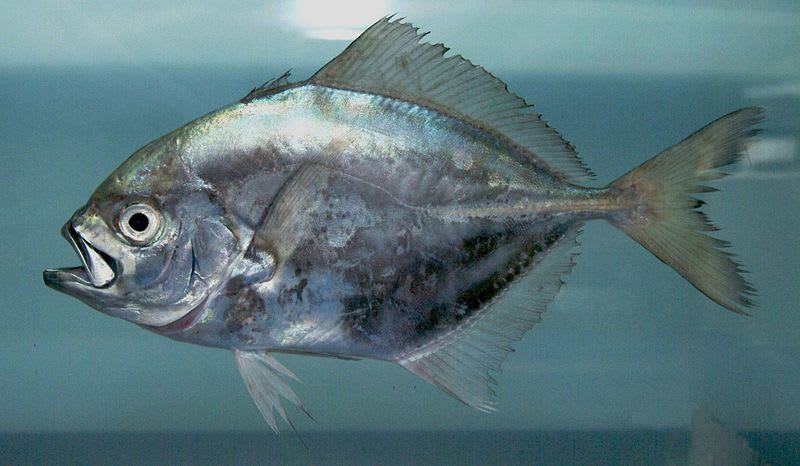
Taxonomy
- Kingdom
- Animalia
- Phylum
- Chordata
- Class
- Actinopterygii
- Order
- Cichliformes
- Family
- Carangidae
- Genus
- Uraspis
- Species
- secunda
Habitat
Cottonmouth jacks inhabit coastal and offshore waters of tropical and subtropical oceans, often over continental shelves and near reefs. They prefer depths from 50 to 200 meters and are commonly found in areas with moderate currents. This species avoids extremely shallow or turbid waters.
Diet
Cottonmouth jacks primarily feed on smaller fish like anchovies and sardines, as well as squid and crustaceans. They hunt in schools using ambush tactics, often during dawn and dusk when prey is most active. Feeding behavior involves rapid chases in midwater columns.
Behavior
Cottonmouth jacks are highly social, forming large schools that enhance protection from predators and improve foraging efficiency. They are diurnal, most active during the day, and exhibit seasonal migrations to follow food sources. These fish are fast swimmers and can become territorial around prime feeding areas.
Fishing
The Cottonmouth jack, a member of the Carangidae family, offers exciting sport fishing opportunities in tropical and subtropical waters, supporting conservation through angler license fees that fund habitat protection and population monitoring programs. Target this species using trolling or jigging techniques with medium-light tackle, such as a 7-9 foot rod paired with a reel spooled in 10-20 lb test line, to handle their fast swims and schooling behavior in deeper waters. Opt for bait like live anchovies, sardines, or squid, or effective lures such as metal jigs and spoons that mimic their natural prey for the best results. The prime season runs from late spring through summer in warmer months when they are more active and migratory, with dawn and dusk being the optimal times for strikes as they ambush prey in midwater columns. Focus on offshore habitats over continental shelves and near reefs in depths of 50-200 meters across the Atlantic, Indian, and Pacific Oceans, where schools are commonly found in moderate currents—always check local regulations for bag limits that ensure sustainable populations. Record sizes reach up to 60 cm (about 24 inches) and 5 pounds, with no specific IGFA all-tackle record noted, highlighting the thrill of potentially landing a personal best while adhering to catch-and-release practices that maintain their stable, Least Concern status as assessed by the IUCN.
Conservation Status
Listed as Least Concern by IUCN.