
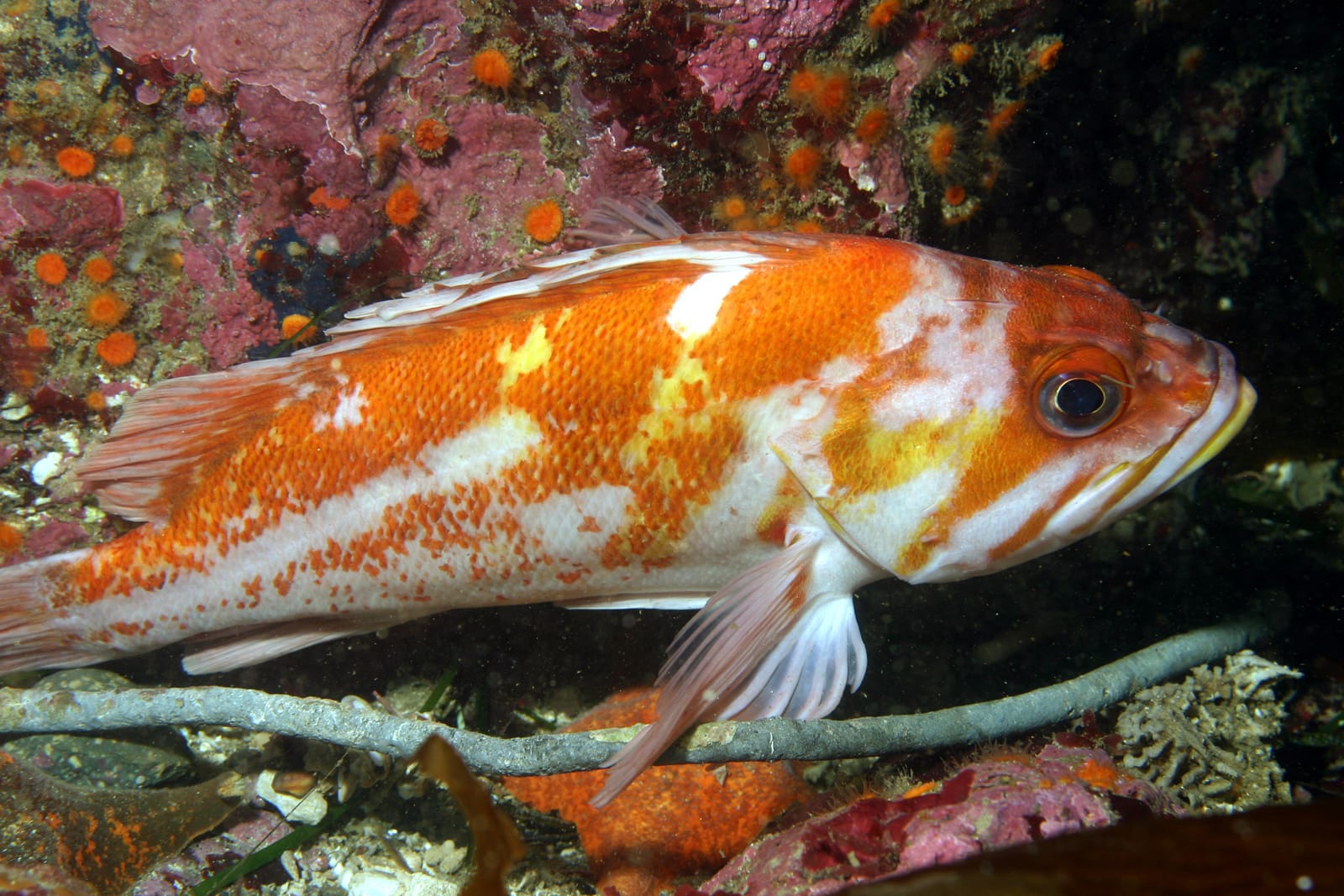
Taxonomy
- Kingdom
- Animalia
- Phylum
- Chordata
- Class
- Actinopterygii
- Order
- Salmoniformes
- Family
- Sebastidae
- Genus
- Sebastes
- Species
- caurinus
Habitat
Copper rockfish primarily inhabit rocky reefs, kelp forests, and boulder-strewn areas in the eastern Pacific Ocean. They prefer depths from 10 to 180 meters, with cooler waters ranging from Alaska to Baja California, Mexico. These environments provide ample hiding spots among rocks and vegetation.
Diet
Copper rockfish feed mainly on small fish, squid, and crustaceans such as crabs and shrimp. They are ambush predators that lie in wait among rocks to surprise prey, typically hunting during daylight hours. Feeding activity peaks in the morning and late afternoon.
Behavior
Copper rockfish are generally solitary or form small groups, displaying territorial behavior by defending specific rocky areas. They are diurnal, active during the day for feeding and resting at night, and can change color slightly for camouflage. They often remain near the seafloor, using their environment for protection.
Fishing
Copper rockfish are a popular sport fish in the eastern Pacific, from Alaska to Baja California, providing anglers with thrilling bottom fishing opportunities that fund conservation through license fees and habitat restoration programs. Use effective techniques like bottom fishing, jigging, or trolling near structures to entice these ambush predators, focusing on depths of 10 to 180 meters around rocky reefs, kelp forests, and boulder-strewn areas. Opt for medium-heavy rods with 20-30 lb test line and sturdy reels to handle their strong runs and rocky habitats, paired with bait such as live shrimp, crabs, squid, or lures that mimic small fish and crustaceans for the best results. The prime seasons are spring through fall, with peak fishing times in the morning and late afternoon when they are most active feeding. Target them in specific locations like California's Humboldt County or the Gulf of Alaska, where their territorial behavior makes them reliable catches around hiding spots. The IGFA all-tackle world record is 11 pounds 4 ounces, caught off California in 2009. Conservation efforts include state regulations such as size and bag limits, which are effective tools for maintaining healthy populations and supporting angler-funded programs that protect these vital marine ecosystems.
Conservation Status
Listed as Not Evaluated by IUCN.