
Overview
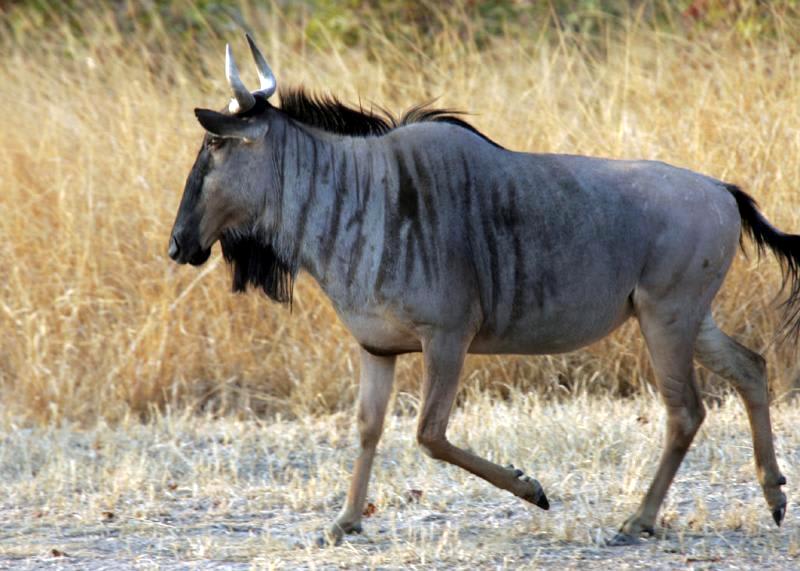
The Cookson wildebeest has the largest body and horns of any wildebeest. The general color is a lighter gray than in the blue wildebeest, and the beard is black.
Taxonomy
- Kingdom
- Animalia
- Phylum
- Chordata
- Class
- Mammal
- Order
- Artiodactyla
- Family
- Bovidae
- Genus
- Connochaetes
- Species
- Connochaetes taurinus
Habitat
Found in short grass plains bordering bush-covered acacia savannas in southern and eastern Africa, thriving in areas that are neither too wet nor too arid. Each year, some East African populations of blue wildebeest take part in a long-distance migration, seemingly timed to coincide with local patterns of rainfall and grass growth. Distribution- Only in the Luangwa Valley in Zambia.
Diet
Primarily short grasses.
Behavior
It forms herds which move about in loose aggregations, the animals being fast runners and extremely wary. The mating season begins at the end of the rainy season and a single calf is usually born. The calf remains with its mother for eight months, after which time it joins a juvenile herd.
Hunting
As they live on open plains they are not hard to locate, but approaching them and determining sex and horn size can be difficult, especially in areas where they are regularly hunted. Often there is little cover, and long shots may be required.
Conservation Status
Listed as Least Concern by IUCN as an overall species, however the Eastern white-bearded wildebeest subspecies is considered to be in serious decline.