
Overview
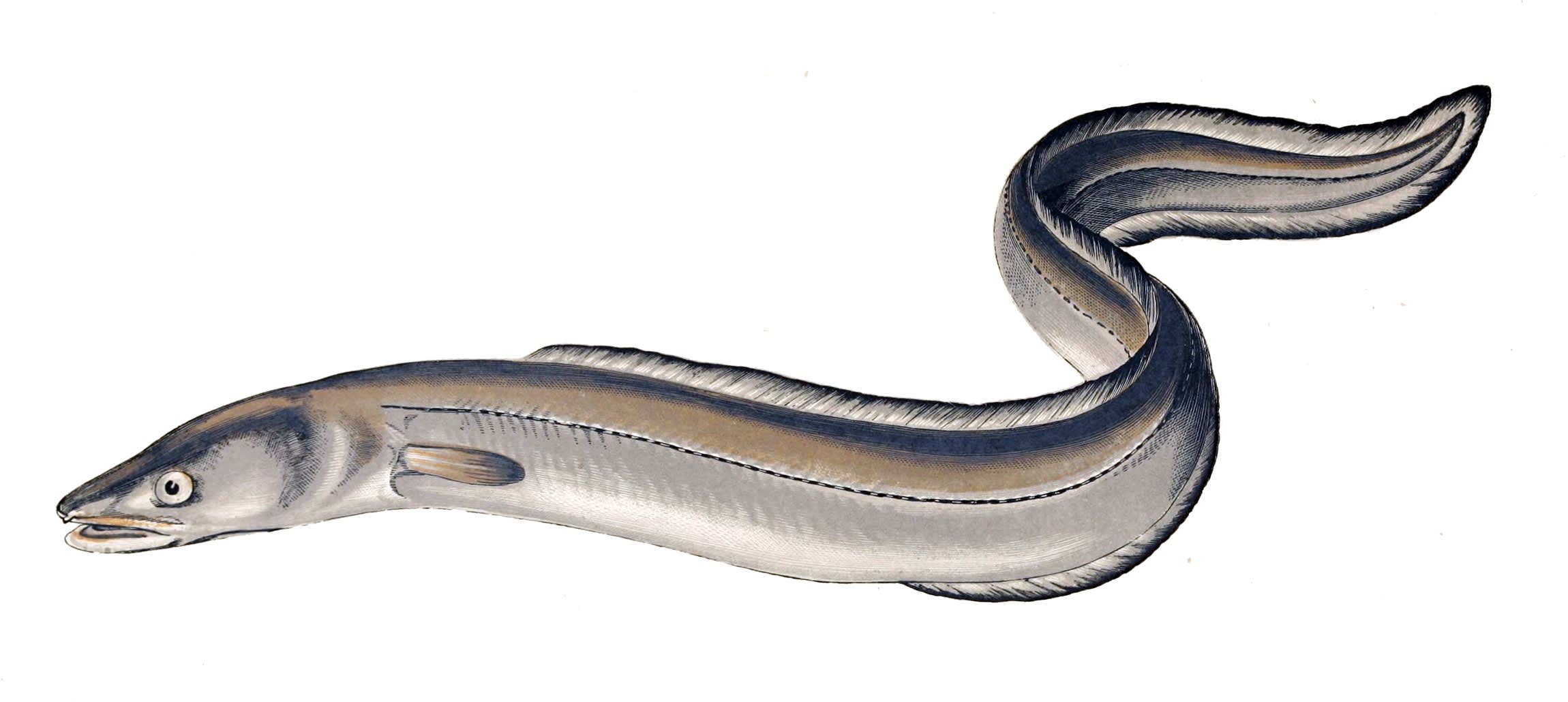
The conger eel is easily distinguished from the moray eel by the presence of pectoral fins, which the moray lacks. It also has a longer snout, its upper jaw is slightly longer than its lower jaw, the head is narrower in appearance, and the dorsal fin does not extend quite as far forward as in the moray.
Taxonomy
- Kingdom
- Animalia
- Phylum
- Chordata
- Class
- Actinopterygii
- Order
- Gonorynchiformes
- Family
- Congridae
- Genus
- Conger
- Species
- conger
Habitat
The conger is native to the eastern Atlantic; Norway and Iceland to Sénégal including the Mediterranean and western Black Sea. Occurrence in Western Pacific needs verification. They inhabit relatively shallow waters in the vicinity of cover material such as rocks, reefs, pier pilings, and especially shipwrecks or other submerged objects suitable as hiding places.
Diet
They are known to eat octopus, lobsters, crabs, and many types of reef fishes.
Behavior
Conger eels are nocturnal hunters, spending the day hidden in crevices or under rocks and emerging at night to forage. They are solitary and territorial, aggressively defending their hiding spots from intruders. They exhibit ambush predation, lying in wait to strike at prey with powerful jaws.
Fishing
Fishing for conger is extremely popular in Britain. It's great strength, sharp teeth, ability to swim backward, and propensity for remaining in or near cover make it a formidable foe. Because it remains in sheltered places, it is almost exclusively an anglers' fish since it is highly unlikely to be taken in a net. They should be considered dangerous when boated or speared as their teeth are strong and sharp. They are considered excellent food fish.
Conservation Status
Listed as Least Concern by IUCN.