
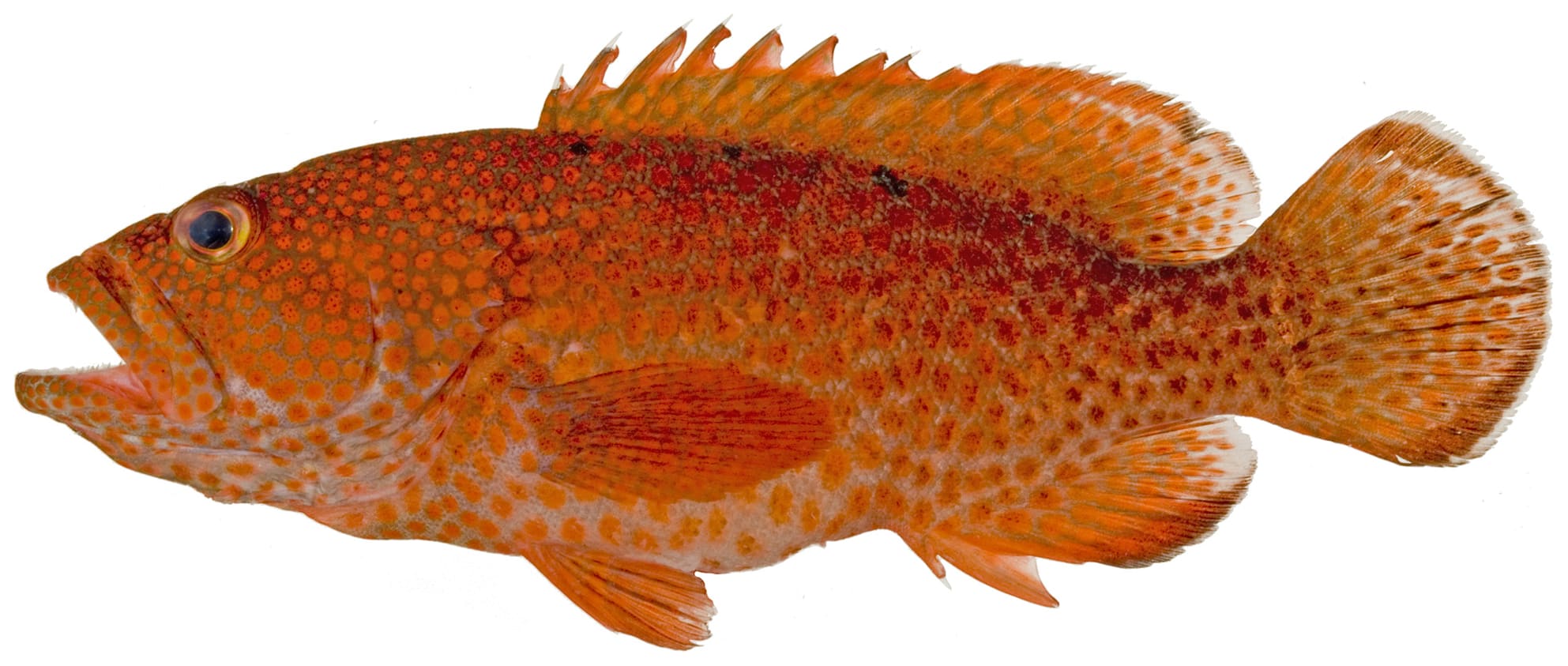
Taxonomy
- Kingdom
- Animalia
- Phylum
- Chordata
- Class
- Actinopterygii
- Order
- Scorpaeniformes
- Family
- Serranidae
- Genus
- Cephalopholis
- Species
- fulva
Habitat
Coneys inhabit coral reefs, rocky ledges, and areas with abundant crevices in the western Atlantic, preferring depths from 10 to 150 meters. They are commonly found in warm tropical waters around the Caribbean, Florida, and Brazil, often seeking shelter in caves or under overhangs for protection.
Diet
Coneys primarily feed on small fishes, crustaceans like crabs and shrimp, and occasionally octopuses. They are ambush predators that hunt during the day, using their camouflage to surprise prey in reef environments.
Behavior
Coneys are generally solitary or found in small groups, exhibiting territorial behavior by defending specific reef areas. They are diurnal, active during the day for feeding and resting in crevices at night, and can rapidly change color to blend with their surroundings or signal during interactions.
Fishing
As a popular sport fish in the Western Atlantic, including Florida, the Bahamas, and the Caribbean, the coney (Cephalopholis fulva) offers exciting opportunities for anglers while supporting aquatic conservation through license fees and excise taxes that fund habitat restoration. Target coneys using effective bottom fishing techniques like jigging or bait fishing around coral reefs and rocky ledges in depths of 10 to 150 meters, where they ambush prey; cast near caves or overhangs for the best results. Opt for medium-light tackle, such as a 7-foot rod with a reel spooled in 10-20 lb test line and circle hooks to minimize injury during catch-and-release, paired with bait like live shrimp, crabs, or small fish, or artificial lures such as metal jigs and soft plastics to mimic their natural diet. The prime season runs year-round in tropical waters but peaks during warmer months for spawning, with daytime hours being most productive due to their diurnal behavior. The IGFA all-tackle world record for coney stands at 7 pounds, caught in the Florida Keys, showcasing the thrill of pursuing these feisty reef dwellers. Conservation efforts, including angler-supported stocking programs and slot limits as effective management tools, ensure healthy populations remain stable, as evidenced by the species' Least Concern status from the IUCN, making responsible fishing a key driver in protecting these vibrant marine ecosystems.
Conservation Status
Listed as Least Concern by IUCN.