
Overview
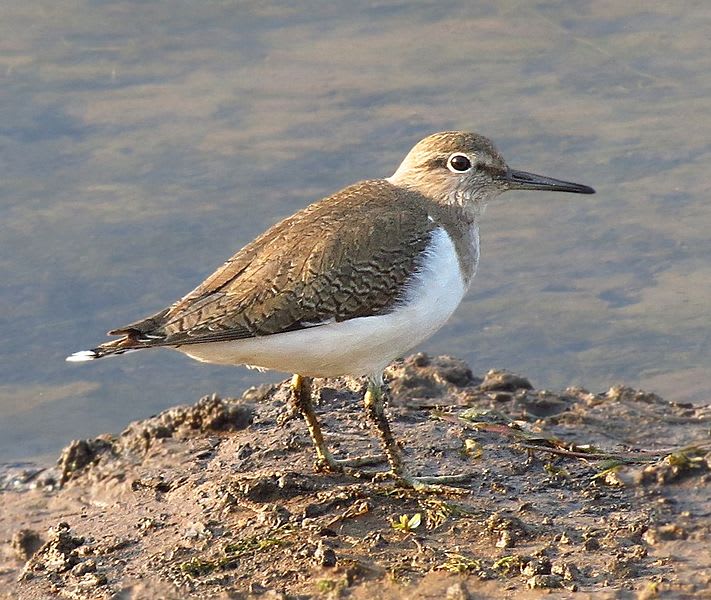
It has greyish-brown upperparts, white underparts, short dark-yellowish legs and feet, and a bill with a pale base and dark tip. In winter plumage, they are duller and have more conspicuous barring on the wings, though this is still only visible at close range. Juveniles are more heavily barred above and have buff edges to the wing feathers. This species is very similar to the slightly larger spotted sandpiper (A. macularia) in non-breeding plumage. But its darker legs and feet and the crisper wing pattern (visible in flight) tend to give it away, and of course they are only rarely found in the same location.
Taxonomy
- Kingdom
- Animalia
- Phylum
- Chordata
- Class
- Bird
- Family
- Charadriidae
- Genus
- Tringa
- Species
- hypoleucos
Habitat
Coastal shorelines.
Diet
Insects, crustaceans and other invertebrates.
Behavior
The common sandpiper forages by sight on the ground or in shallow water, picking up small food items. It nests on the ground near freshwater. When threatened, the young may cling to their parent's body to be flown away to safety.
Hunting
Not hunted.
Conservation Status
Listed as Least Concern by IUCN.