
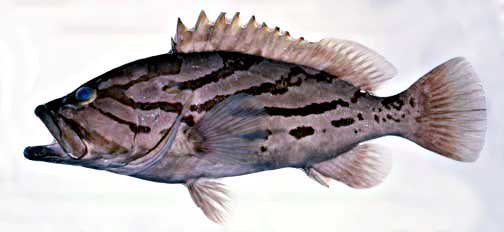
Taxonomy
- Kingdom
- Animalia
- Phylum
- Chordata
- Class
- Actinopterygii
- Order
- Scorpaeniformes
- Family
- Serranidae
- Genus
- Epinephelus
- Species
- morrhua
Habitat
Comet groupers primarily inhabit coral reefs and rocky substrates in the Indo-Pacific region. They prefer depths from 10 to 200 meters, often found around caves, ledges, and areas with strong currents. These environments provide ample hiding spots and ambush opportunities.
Diet
Comet groupers feed mainly on small fish, crustaceans, and cephalopods like squid. They are ambush predators that lie in wait among corals and strike quickly at prey. Feeding activity peaks during the day in their reef habitats.
Behavior
Comet groupers are solitary and territorial, often defending a specific area of the reef from intruders. They are primarily nocturnal but can be active during the day, using camouflage to blend into their surroundings. These fish exhibit ambush hunting behavior, remaining motionless until prey is within range.
Fishing
The Comet grouper is a popular sport fish in the Indo-Pacific, prized for its powerful runs and challenging fights in deep reef settings, supporting conservation through angler license fees that fund habitat protection and population monitoring. Target them using bottom fishing or trolling techniques with heavy tackle, including a sturdy rod with 20-50 lb test line, strong reels, and circle hooks to minimize injury during catch-and-release; effective baits and lures include live small fish, squid, or jigging spoons that imitate their natural prey like crustaceans and cephalopods. The best seasons are during warmer months for spawning aggregations, with peak activity at dawn and dusk in depths of 10-200 meters around coral reefs, caves, and rocky ledges in areas like the Indian Ocean, Red Sea, or Western Pacific—focus on strong current zones for higher success. Record sizes include lengths up to 120 cm and weights to 16 lbs 13 oz, with potential IGFA all-tackle records highlighting the species' appeal; these records underscore the importance of regulated fishing. Conservation efforts, such as slot limits and seasonal closures in many regions, are effective management tools that maintain stable populations, as evidenced by its IUCN Least Concern status, with angler-supported programs ensuring sustainable practices that protect these vital ecosystems.
Conservation Status
Listed as Least Concern by IUCN.