
Overview
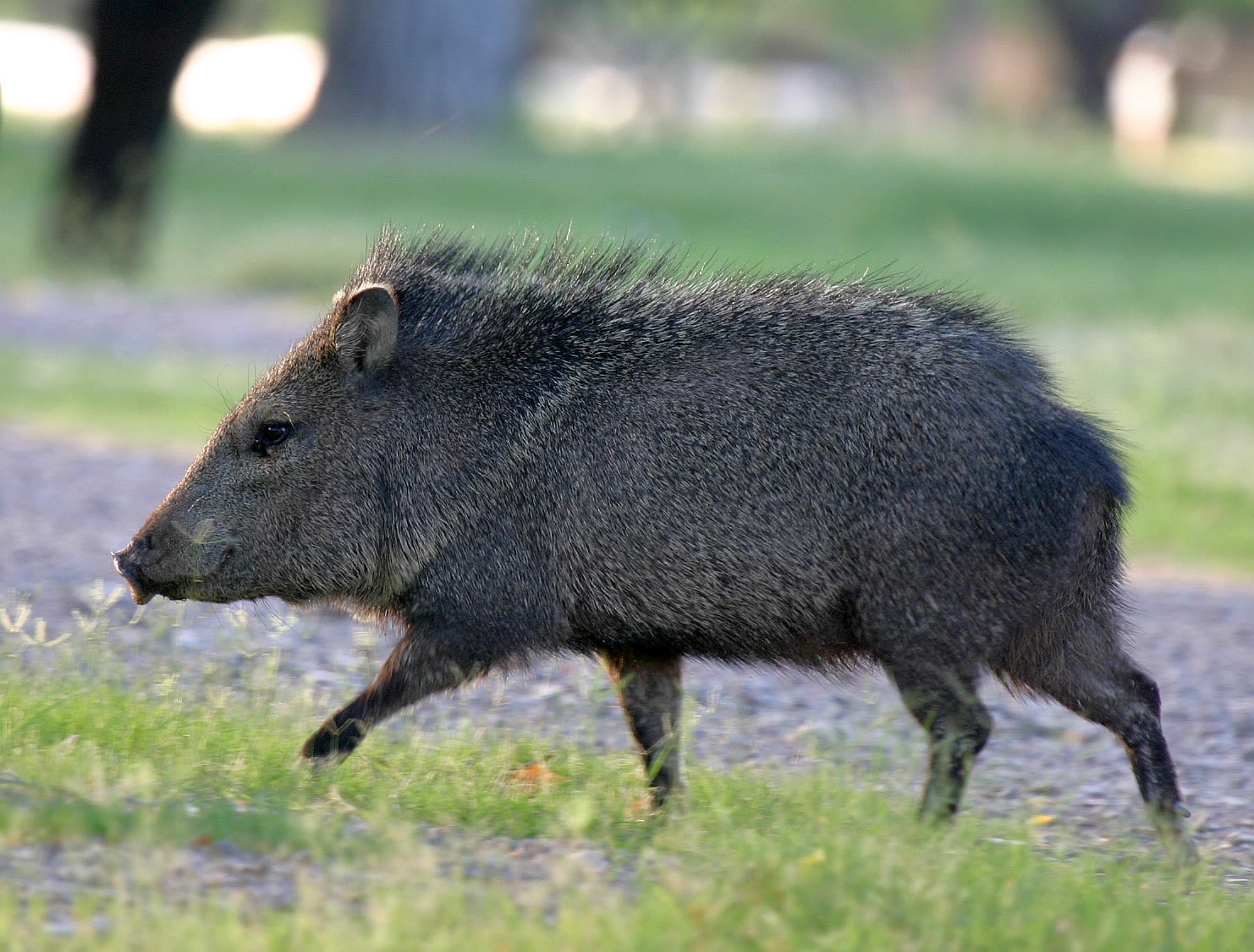
The smallest of the three species of peccary. Coloration is a grizzled dark gray with the legs almost black, and there is a whitish collar diagonally from shoulder to throat.
Taxonomy
- Kingdom
- Animalia
- Phylum
- Chordata
- Class
- Mammal
- Order
- Artiodactyla
- Family
- Tayassuidae
- Genus
- Pecari
Habitat
It inhabits deserts and xeric shrublands, tropical and subtropical grasslands, savannas, and shrublands, flooded grasslands and savannas, tropical and subtropical dry broadleaf forests, and several other habitats, as well. In addition, it is well adapted to habitats shared by humans, merely requiring sufficient cover; they can be found in cities and agricultural land throughout their range, where they consume garden plants.
Diet
Collared peccaries normally feed on cactus, mesquite beans, fruits, roots, tubers, palm nuts, grasses, invertebrates, and small vertebrates. In areas inhabited by humans, they will also consume cultivated crops and ornamental plants, such as tulip bulbs.
Behavior
This animal tends to live in large herds of up to 20 with the females usually being dominant. In the wild, the collared peccary can live up to 10 years. While this animal can go weeks without water, it drinks regularly when water is available.
Hunting
Hunting is done in a number of ways - stalking, from blinds, and in Texas, they can be hunted with hounds, but typically at low elevations.
Conservation Status
Listed as Least Concern by IUCN, but this species has experienced significant habitat fragmentation as a result of human expansion.