
Overview
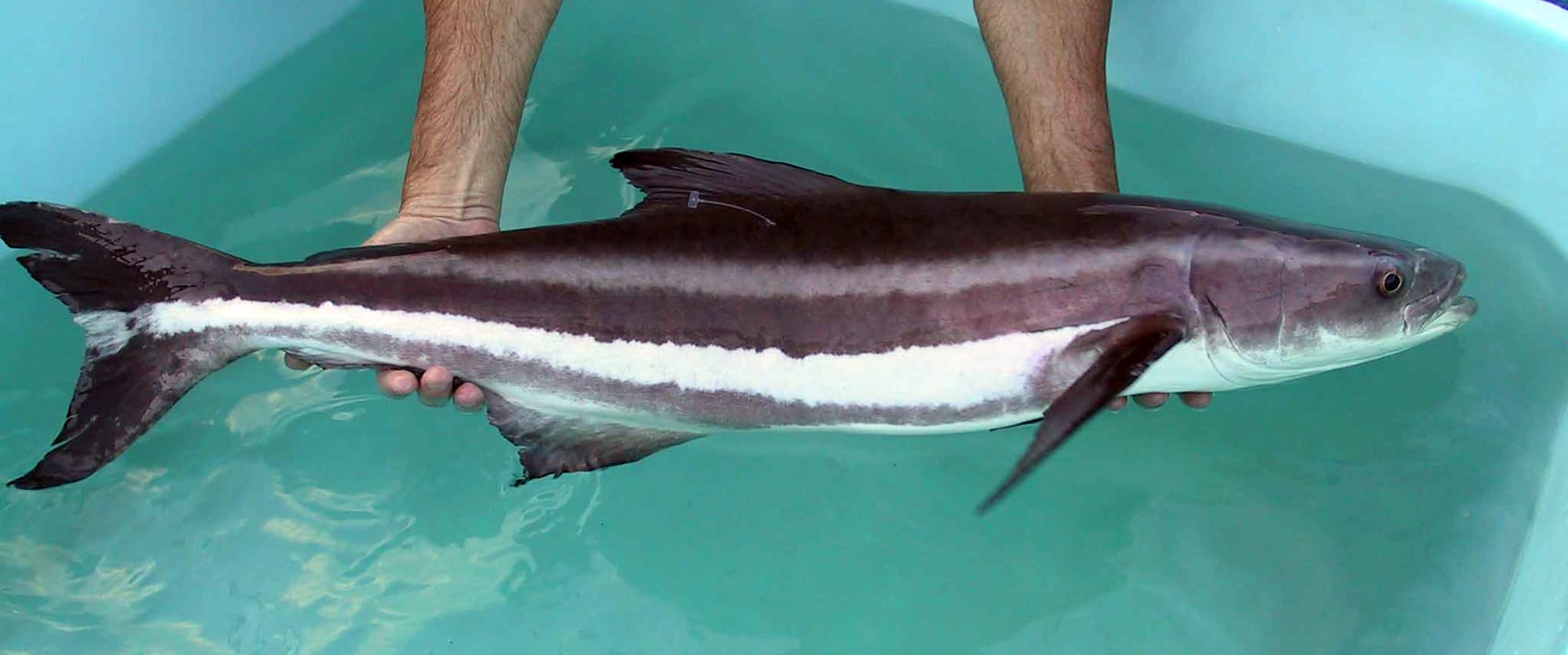
The Cobia has a long, broad, depressed head. The overall appearance of the fish is similar to that of a small shark, given the shape of the body, the powerful tail fin, and the elevated anterior portion of the second dorsal fin. Even more striking is it's resemblance to the remora. The most noticeable difference between these two species is the suction pad on the remora's head. The Cobia is known to swim with sharks and other large species as the remora does. The Cobia's coloration and markings are distinctive. The back is dark chocolate brown while the sides are lighter with alternate horizontal stripes of brown and silver or bronze and white. The markings on smaller specimens are more vivid; the black and dark stripes are blacker, making the lighter areas stand out more.
Taxonomy
- Kingdom
- Animalia
- Phylum
- Chordata
- Class
- Actinopterygii
- Order
- Perciformes
- Family
- Rachycentridae
- Genus
- Rachycentron
- Species
- canadum
Habitat
Worldwide in tropical and warm temperate waters both offshore and inshore. Adult cobia seem to prefer shallow continental shelf waters. They particularly like buoys, pilings, wrecks, anchored boats, flotsam, etc., and will sometimes congregate around these objects.
Diet
Cobia feed on crab, shrimp, and other smaller fish.
Behavior
They are strongly attracted to any structure that interrupts the open water such as pilings, buoys, platforms, anchored boats, floating debris, seaweed rips, channel markers, and offshore oil and gas platforms. Occasionally, they're found tagging along with sharks, rays, and turtles. Smaller cobia are also found inshore inhabiting bays, inlets, and mangroves. Cobia migrate seasonally. They are most common off Texas in June through September and move to south Florida waters in the winter, possibly spending the winter near the Florida Keys.
Fishing
The Cobia is a highly rated, hard hitting game fish that is prone to long, powerful, determined runs and occasional leaps. Often when one is hooked the entire school will surface along with it. Preferred fishing methods are trolling with lures or baits, bottom fishing, jigging, chumming, and spin casting. They can be caught on crustaceans (which is why they are nicknamed “crab eaters” in Australia) as well as on smaller fishes. Good baits are: squid, crabs, small live fishes, cut baits, and strip baits. Spoons, plugs, and weighted feathers can also be used. They rate high as table fare.
Conservation Status
Listed as Least Concern by IUCN.