
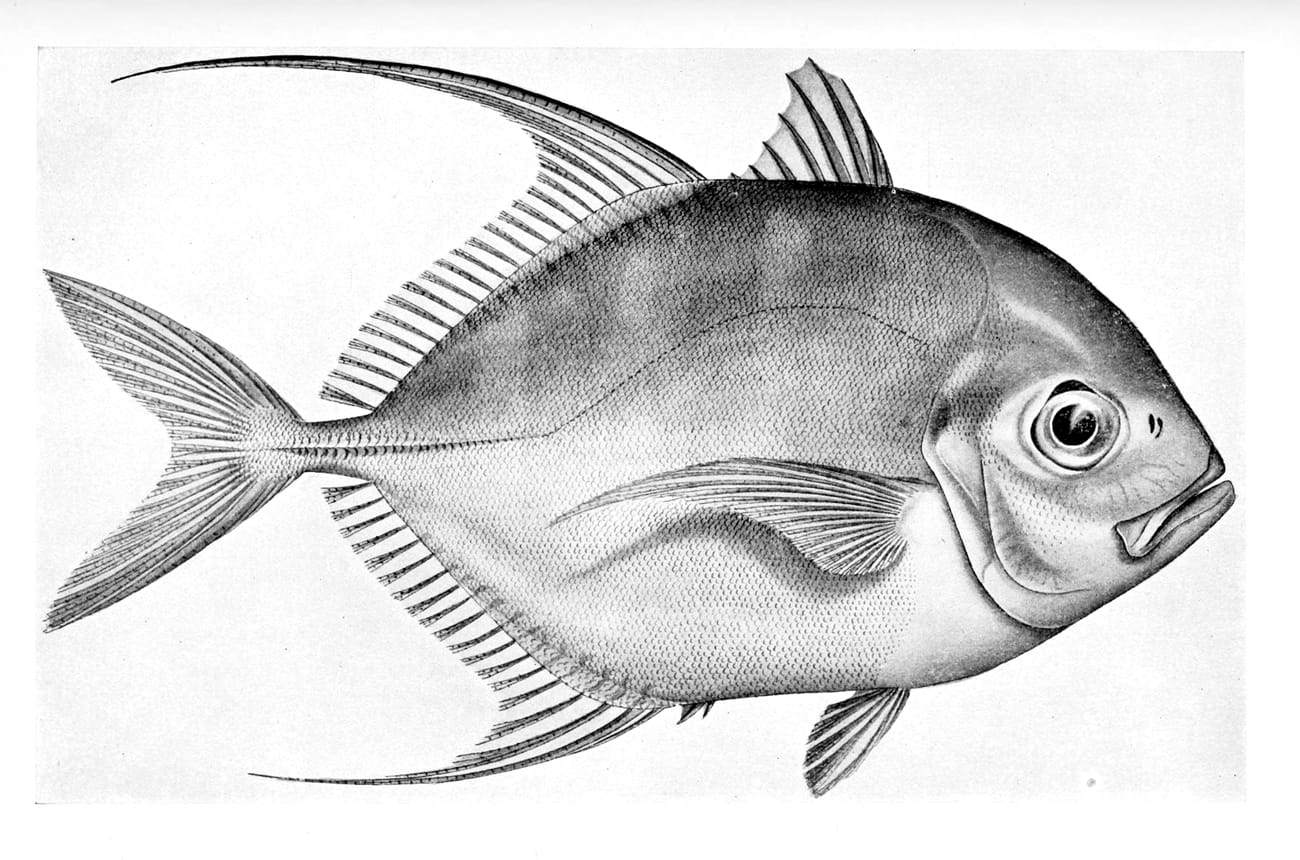
Taxonomy
- Kingdom
- Animalia
- Phylum
- Chordata
- Class
- Actinopterygii
- Order
- Cichliformes
- Family
- Carangidae
- Genus
- Carangoides
- Species
- coeruleopinnatus
Habitat
Coastal trevally inhabit inshore reefs, lagoons, and sandy bottoms in tropical and subtropical waters of the Indo-Pacific. They prefer depths from 10 to 100 meters and are often found near structures like coral heads or shipwrecks. This species avoids very turbid or freshwater environments.
Diet
Coastal trevally primarily feed on small fish such as sardines and anchovies, as well as crustaceans like shrimp and crabs. They are ambush predators that hunt in schools during the day, using their speed to chase down prey. Feeding activity peaks at dawn and dusk in shallow waters.
Behavior
Coastal trevally are highly social, forming large schools that provide protection and aid in hunting. They are diurnal, actively swimming and foraging during the day while resting in deeper waters at night, and exhibit territorial behavior around feeding areas. These fish are fast swimmers, capable of sudden bursts of speed to evade predators or capture prey.
Fishing
Coastal trevally provide thrilling light-tackle fishing in the Indo-Pacific, with effective techniques including trolling lures, casting jigs, or using live bait to mimic their prey like small fish and crustaceans; focus on precise presentations near structures for the best results. Opt for medium-light spinning rods (6-8 feet) with 10-20 lb test monofilament or braided line, paired with a fast-retrieve reel to handle their speedy runs, and use baits such as live sardines, anchovies, shrimp, or metal jigs and soft plastics that imitate these. The best season is year-round in tropical waters, with peak action at dawn and dusk when they actively hunt in schools; target warmer months for potentially higher activity during spawning. Focus on inshore reefs, lagoons, and sandy bottoms from 10 to 100 meters, especially around coral heads or shipwrecks, to intercept their schooling behavior. Coastal trevally typically reach up to 50 cm and 2 lbs 5 oz, with no specific IGFA all-tackle record listed, but anglers can aim for personal bests while practicing conservation-minded approaches. As a Least Concern species with a stable population, regulations like slot limits and catch-and-release promote healthy stocks, supported by angler-funded programs that protect these habitats and ensure sustainable fishing traditions.
Conservation Status
Listed as Least Concern by IUCN.