
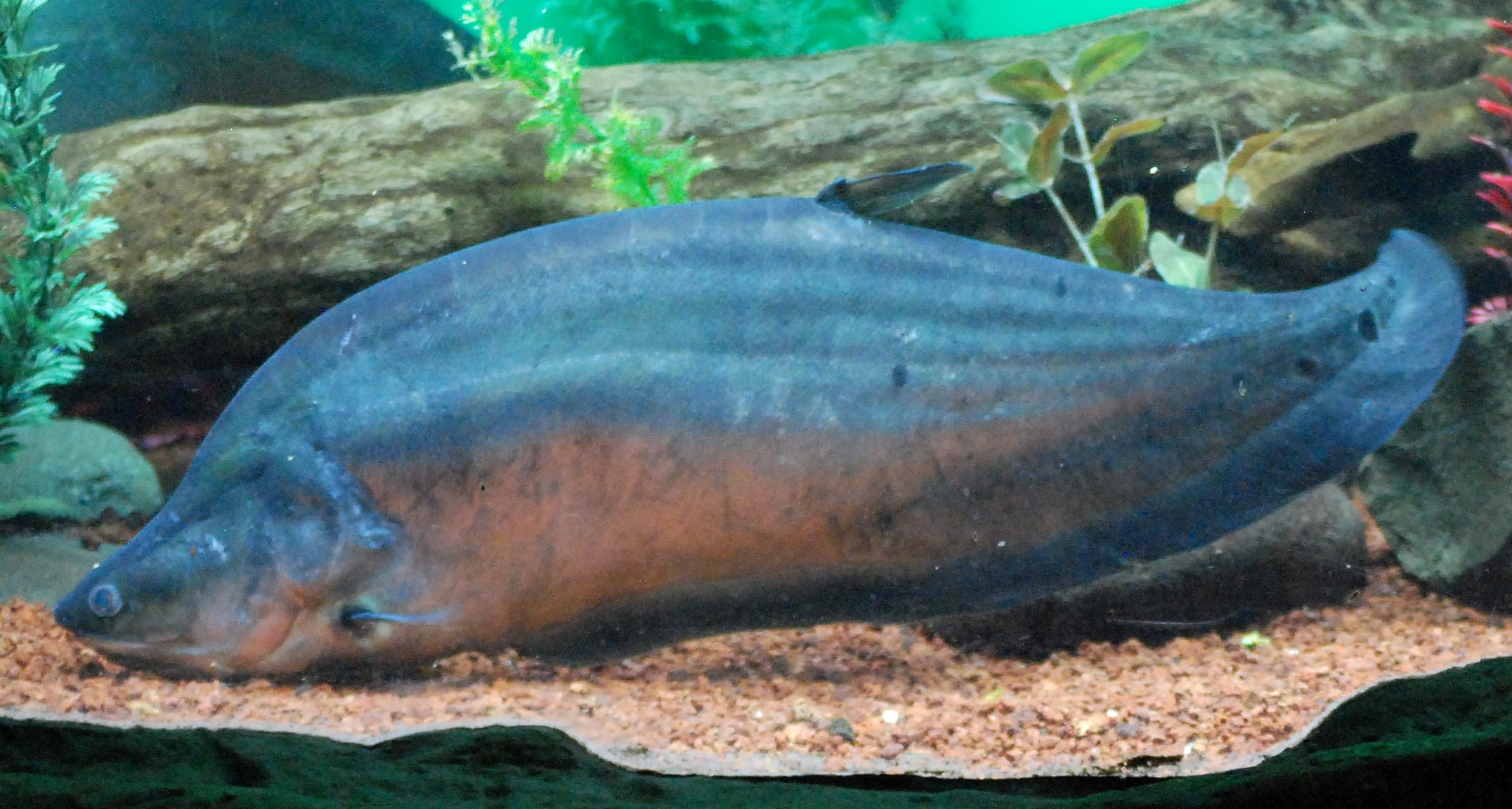
Taxonomy
- Kingdom
- Animalia
- Phylum
- Chordata
- Class
- Actinopterygii
- Order
- Perciformes
- Family
- Notopteridae
- Genus
- Chitala
- Species
- chitala
Habitat
Clown knifefish primarily inhabit freshwater rivers, lakes, and floodplains in tropical and subtropical regions of South and Southeast Asia. They prefer slow-moving or stagnant waters with abundant vegetation, submerged logs, and muddy substrates. In introduced areas like Florida, they thrive in warm, canal systems and reservoirs.
Diet
Clown knifefish are carnivorous and primarily feed on smaller fish, insects, crustaceans, and occasionally worms. They are nocturnal hunters, using their sensitive lateral line to detect prey in low-light conditions, and often ambush from hiding spots among vegetation. Feeding activity peaks at night in shallow waters.
Behavior
Clown knifefish are primarily nocturnal, spending days hiding in vegetation or under structures and becoming active at night to hunt. They are solitary and territorial, especially during breeding, often defending small areas of their habitat. They can produce weak electric fields for navigation and communication in murky waters.
Fishing
Anglers targeting the clown knifefish, an invasive species in places like Florida's canal systems and reservoirs, can employ effective techniques such as night fishing with bottom rigs or slow-trolling lures to mimic their natural prey, given their nocturnal and ambush-hunting behavior; use medium-action rods with 10-20 lb test line, paired with reels that handle strong runs, and opt for bait like live minnows, worms, or small crustaceans, or lures such as soft plastics and jigs that imitate fish or insects. The best season is during warmer months from spring through fall, with peak activity at night in shallow, vegetated waters or near submerged logs in slow-moving rivers and lakes of South and Southeast Asia or introduced U.S. habitats, where they thrive in tropical conditions. Record sizes include lengths up to 122 cm and weights to 14 lbs 0 oz, with IGFA recognition possible for exceptional catches. Conservation-wise, fishing for clown knifefish in invasive ranges supports population control efforts, funded by angler licenses that aid habitat restoration, while in native Asian regions, regulated catch-and-release practices help maintain their Near Threatened status as per IUCN, ensuring balanced ecosystems through programs that promote sustainable angling and protect waterways.
Conservation Status
Listed as Near Threatened by IUCN.