
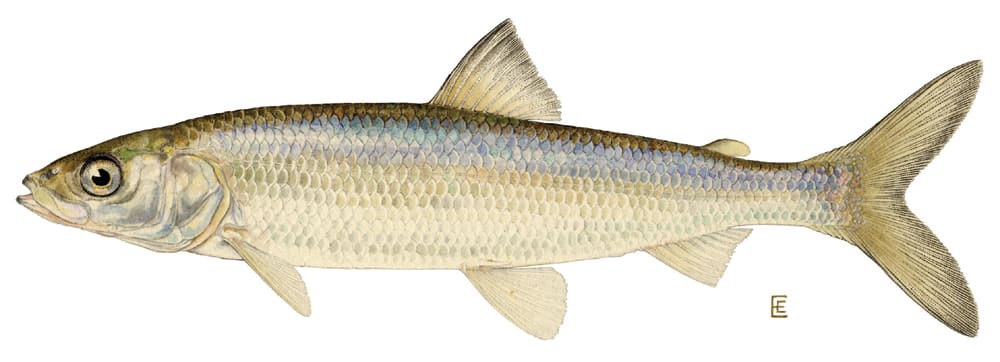
Taxonomy
- Kingdom
- Animalia
- Phylum
- Chordata
- Class
- Actinopterygii
- Order
- Perciformes
- Family
- Salmonidae
- Genus
- Coregonus
- Species
- artedi
Habitat
Inhabits open waters of lakes and large rivers.
Diet
Cisco primarily feed on zooplankton such as Daphnia and copepods, along with small insects and occasionally larval fish. They are filter feeders, often swimming with their mouths open to strain food from the water column. Feeding activity peaks at night or in low-light conditions when they are most active.
Behavior
Cisco form large schools in open lake waters for protection and feeding efficiency. They are primarily nocturnal or crepuscular, migrating seasonally to shallower areas for spawning. These fish are not territorial but exhibit schooling behavior to evade predators. They can tolerate a range of water temperatures but prefer cold, deep waters.
Fishing
Target Cisco in the open waters of large lakes and rivers across North America, such as the Great Lakes, Upper Mississippi River Basins, and Arctic River areas, using effective techniques like trolling with downriggers or vertical jigging to reach their preferred deep, cold depths; opt for light to medium tackle setups with 6-10 lb test monofilament or fluorocarbon line, paired with small lures such as metal spoons, jigs, or flies that mimic zooplankton, small insects, or minnows for the best results—live bait like small shiners can also work; the prime season is fall during spawning runs in shallower gravel or sandy areas, with peak activity at night or low-light conditions, though they can be caught year-round in deeper waters; record sizes include the IGFA all-tackle world record of 7 pounds 6 ounces, highlighting their impressive growth potential; conservation-wise, Cisco populations are stable and listed as Least Concern, with angler-funded programs through license fees supporting stocking initiatives and habitat protection, while regulations like slot limits and catch-and-release in certain regions serve as smart management tools to ensure sustainable fisheries and thriving aquatic ecosystems.
Conservation Status
Listed as Least Concern by IUCN.