
Overview
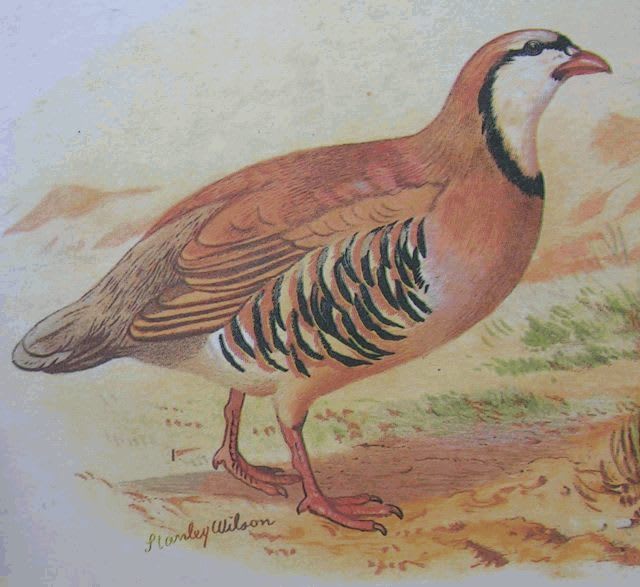
The chukar partridge has a light brown back, grey breast, a short neck and tail, buffy belly, black and chestnut barring on flanks, a white throat, and red bill and legs.
Taxonomy
- Kingdom
- Animalia
- Phylum
- Chordata
- Class
- Bird
- Family
- Phasianidae
- Genus
- Alectoris
- Species
- chukar
Habitat
Arid to semiarid high-elevation shrubland generally on steep hillsides such as bluffs.
Diet
Leaves, seeds and insects.
Behavior
In the non-breeding season, chukar partridge are found in small coveys of 10 or more (up to 50) birds. In summer, chukars form pairs to breed. During this time, the cocks are very pugnacious calling and fighting. During winter they descend into the valleys and feed in fields. They call frequently during the day and especially in the mornings and evenings. The call is loud and includes loud repeated Chuck notes and sometimes duetting Chuker notes. Several calls varying with context have been noted. The commonest call is a rallying call which when played back elicits a response from birds and has been used in surveys, although the method is not very reliable. When disturbed, it prefers to run rather than fly, but if necessary it flies a short distance often down a slope on rounded wings, calling immediately after alighting. In Utah, birds were found to forage in an area of about 2.6 km2 (1.0 sq mi). and travel up to 4.8 km (3.0 mi) to obtain water during the dry season. The home range was found to be even smaller in Idaho. The breeding season is summer. Males perform tidbitting displays, a form of courtship feeding where the male pecks at food and a female may visit to peck in response. The males may chase females with head lowered, wing lowered and neck fluffed. The male may also perform a high step stiff walk while making a special call. The female may then crouch in acceptance and the male mounts to copulate, while grasping the nape of the female. Males are monogamous. The nest is a scantily lined ground scrape, though occasionally a compact pad is created with a depression in the center. Generally, the nests are sheltered by ferns and small bushes, or placed in a dip or rocky hillside under an overhanging rock. About 7 to 14 eggs are laid. The eggs hatch in about 23–25 days. In captivity they can lay an egg each day during the breeding season if eggs are collected daily. Chicks join their parents in foraging and will soon join the chicks of other members of the covey.
Hunting
Hunting with a pointer and retriever is ideal. Cylinder and modified chokes for a double gun with heavy loads (No. 6 shot) are advised.
Conservation Status
Listed as Least Concern by IUCN.