
Overview
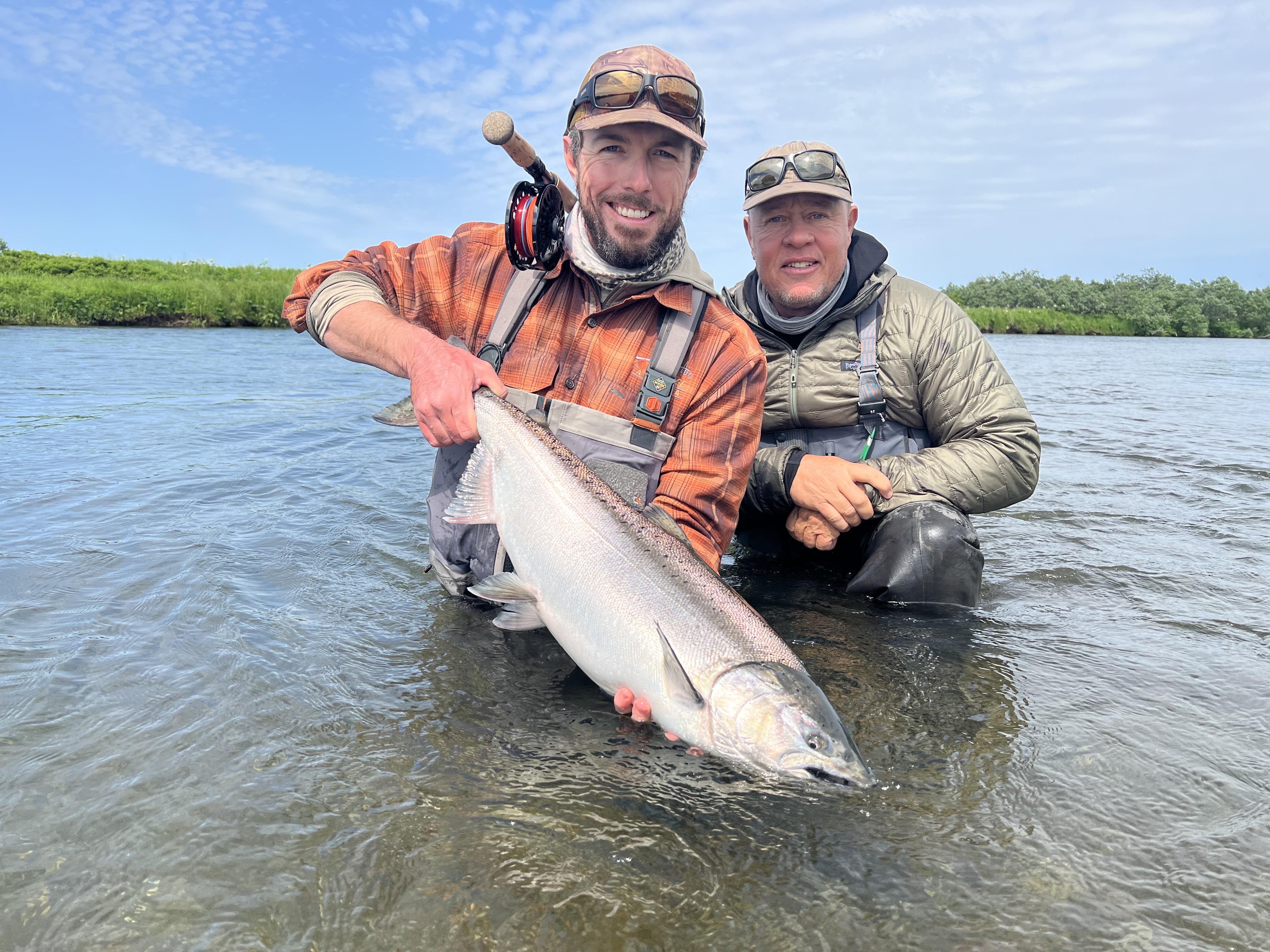
Its body is typical of the Pacific Salmon group (see “Salmons, Trouts, and Chars”). At sea, it is basically a silvery fish with spotting on the back, upper sides, top of the head, and all the fins, including all of the tail fin. Spawning Chinooks are olive brown to purplish or even red and undergo a radical metamorphosis, especially the males which develop a large kype. One way to distinguish the Chinook from other species is by its black mouth and gums. The similar looking Coho, Oncorhynchus kisutch, has a black mouth, but white gums, except in the Great Lakes population where the gums may be gray or black.
Taxonomy
- Kingdom
- Animalia
- Phylum
- Chordata
- Class
- Actinopterygii
- Order
- Perciformes
- Family
- Salmonidae
- Genus
- Oncorhynchus
- Species
- tshawytscha
Habitat
Chinook salmon primarily inhabit cold, marine waters of the North Pacific Ocean, including coastal areas, estuaries, and large rivers. They prefer temperatures below 15°C and are often found in productive feeding grounds with abundant prey. During spawning, they migrate to freshwater streams and rivers with gravel beds for egg deposition.
Diet
Juvenile Chinook salmon feed on insects, zooplankton, and small aquatic invertebrates in freshwater streams. In the ocean, adults consume fish like herring and anchovies, as well as squid and shrimp, often hunting in schools during dawn and dusk.
Behavior
Chinook salmon are anadromous, spending most of their life in the ocean before migrating back to natal rivers to spawn, exhibiting strong homing instincts guided by scent. They form schools in marine environments for feeding and protection but become solitary and aggressive during spawning runs. In rivers, they leap over obstacles and defend spawning territories vigorously.
Fishing
It is an extremely important food and commercial fish, and due to its large size and game nature, an important sport fish. It is the only Pacific salmon in which the meat may be regularly either red or white, but the red meat commands a higher price.
Conservation Status
Listed as Not Evaluated by IUCN.