
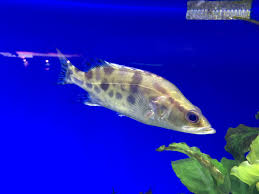
Taxonomy
- Kingdom
- Animalia
- Phylum
- Chordata
- Class
- Actinopterygii
- Order
- Perciformes
- Family
- Percidae
- Genus
- Siniperca
- Species
- chuatsi
Habitat
Chinese perch inhabit freshwater rivers, lakes, and reservoirs in East Asia, particularly in the Yangtze and Amur River basins. They prefer areas with vegetation, rocks, or submerged structures for cover and are commonly found in slow-moving or standing waters rather than fast currents.
Diet
Chinese perch are carnivorous, primarily feeding on smaller fish, crustaceans, and insects. They employ an ambush strategy, hunting mainly at dawn and dusk in shallow waters near cover.
Behavior
Chinese perch are solitary and territorial, often hiding in vegetation or rocky areas during the day and becoming more active at night. They exhibit aggressive behavior when defending their territory and are known for their ambush hunting tactics. Spawning males guard nests vigorously, showing protective parental care.
Fishing
Target the Chinese perch, a prized sport fish in East Asia's freshwater systems, using effective techniques like casting lures or live bait near cover to mimic its ambush hunting style; opt for medium-heavy spinning or baitcasting tackle with 10-20 lb test line, paired with hooks sized 2/0 to 4/0 for handling fish up to 10 lbs 8 oz. Use live baits such as minnows, shrimp, or small fish, or artificial lures like crankbaits and soft plastics that imitate crustaceans and insects to entice strikes. The best season is spring during spawning when water temperatures hit 15-20°C, with peak activity at dawn and dusk in shallow waters; focus on habitats in the Yangtze and Amur River basins, including reservoirs, lakes, and slow-moving rivers with vegetation, rocks, or submerged structures for optimal targeting. The species can reach record sizes of up to 70 cm (28 in) and 10 lbs 8 oz, making it a thrilling catch for anglers. Conservation efforts are supported by regulated fishing practices, such as catch-and-release and slot limits in certain areas, which help maintain healthy populations and protect these waterways through angler-funded programs that combat habitat loss and overfishing, ensuring sustainable sport fishing for future generations.
Conservation Status
Listed as Not Evaluated by IUCN.