
Overview
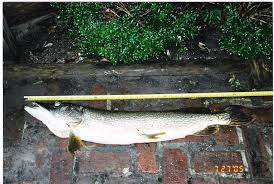
All members of the genus Esox look very much alike, especially when young. The chain pickerel can be recognized by its markings. The sides which are yellowish to greenish (almost black when young) are overlaid with a reticulated, or chain like, pattern of black lines. Also, the pickerels (including the redfin and grass pickerels), have fully scaled cheeks and gill covers. Like its close relatives, northern pike and muskellunge, the chain pickerel is equipped with a large mouth, well adapted for piscivory. The lower jaw, which extends further forward than the upper jaw, is equipped with four sensory pores on the underside.
Taxonomy
- Kingdom
- Animalia
- Phylum
- Chordata
- Class
- Actinopterygii
- Order
- Perciformes
- Family
- Esocidae
- Genus
- Esox
- Species
- niger
Habitat
The species prefers cover and is most often found in patches of aquatic vegetation.
Diet
When the young hatch they feed on plankton, aquatic insects or even their own siblings. At about three inches the diet becomes almost exclusively other fish. Individuals that shift to a diet of fish earliest tend to grow faster.
Behavior
In Texas chain pickerel spawn between December and February. Strings of sticky eggs are deposited on aquatic vegetation and subsequently fertilized. There is no parental care. In general, they lie in wait and strike when unsuspecting prey swim their way.
Fishing
Fishing for chain pickerel is basically a winter-time activity in Texas. It begins with the first real cold front in the fall and continues until March or April when water temperatures warm. The flesh is white and flaky, and very tasty during the winter months. In summer, however, the taste is not as good. Removing the skin before cooking may remedy this.
Conservation Status
Listed as Least Concern by IUCN.