
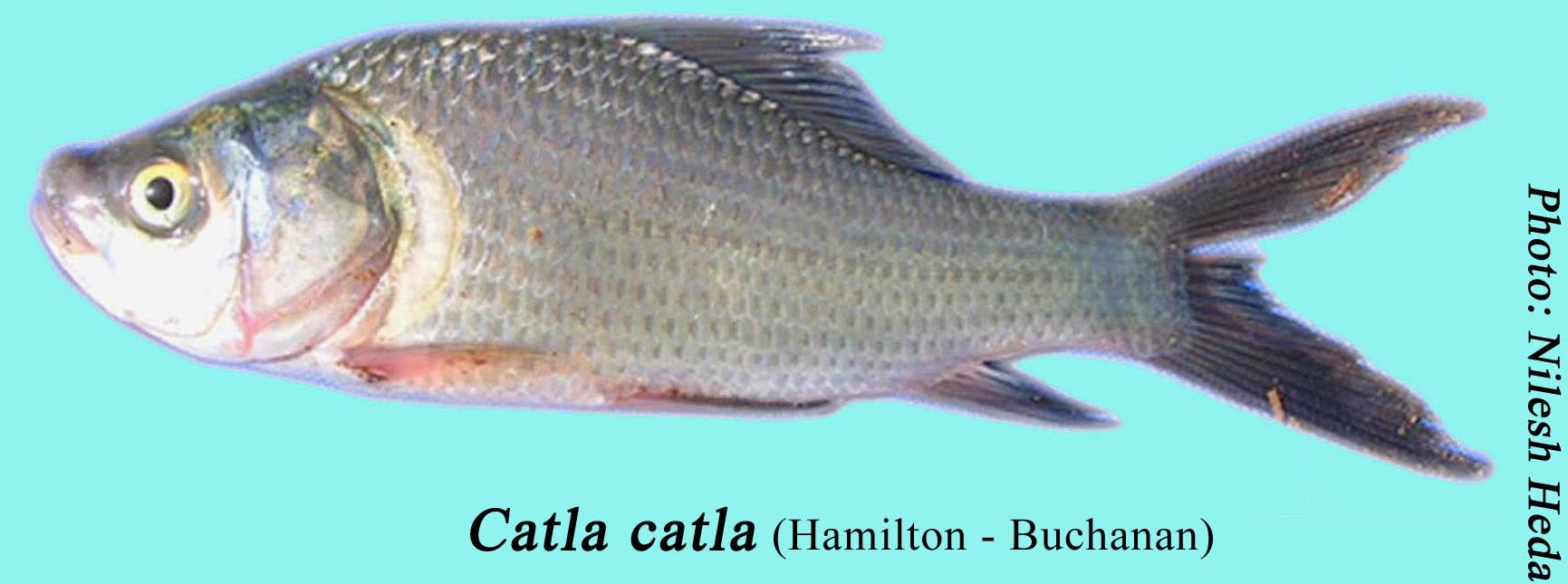
Taxonomy
- Kingdom
- Animalia
- Phylum
- Chordata
- Class
- Actinopterygii
- Order
- Lophiiformes
- Family
- Cyprinidae
- Genus
- Catla
- Species
- catla
Habitat
Catla primarily inhabits large rivers, lakes, and reservoirs in South Asia, favoring clear, flowing waters with high oxygen levels. They are often found in the middle to upper water columns of freshwater systems, including floodplains and man-made ponds.
Diet
Catla mainly feeds on phytoplankton and zooplankton, which it filters from the water column. They are surface feeders active during the day and may also consume insects, plant matter, and detritus.
Behavior
Catla are schooling fish that form large groups for feeding and protection, making them highly social in open waters. They are diurnal, most active during the day, and exhibit migratory behavior upstream during the breeding season. They can be territorial around feeding areas but generally avoid aggressive interactions.
Fishing
Catla (Catla catla) is a popular sport and food fish in South Asia, prized for its fighting spirit and delicious flesh, supporting conservation through license fees and excise taxes that fund habitat restoration in rivers and reservoirs. Target Catla in large rivers, lakes, and reservoirs across India, Pakistan, Bangladesh, and Thailand, focusing on clear, flowing waters with high oxygen levels where they school in the middle to upper water columns; prime spots include the Indus plain, Cauvery River, and floodplains during the monsoon. Use effective techniques like float fishing or bottom rigging with a medium-action rod (7-9 feet), 10-20 lb test line, and a size 2-6 hook to handle their strong runs, casting baits such as dough balls, bread, worms, or small live bait that mimic their diet of phytoplankton, zooplankton, and insects. The best season is during the monsoon months from June to September when they are most active and migratory for spawning, with peak bites in the early morning or late afternoon on sunny days; however, they can be caught year-round in stocked ponds supported by angler-funded programs. Aim for record-sized fish, with the largest documented at up to 41 pounds 10 ounces and lengths reaching 1.8 meters, promoting catch-and-release for smaller individuals to maintain healthy populations as per slot limits and regulations in many regions, which are smart management tools ensuring sustainable fisheries and protecting waterways from overfishing.
Conservation Status
Listed as Least Concern by IUCN.