
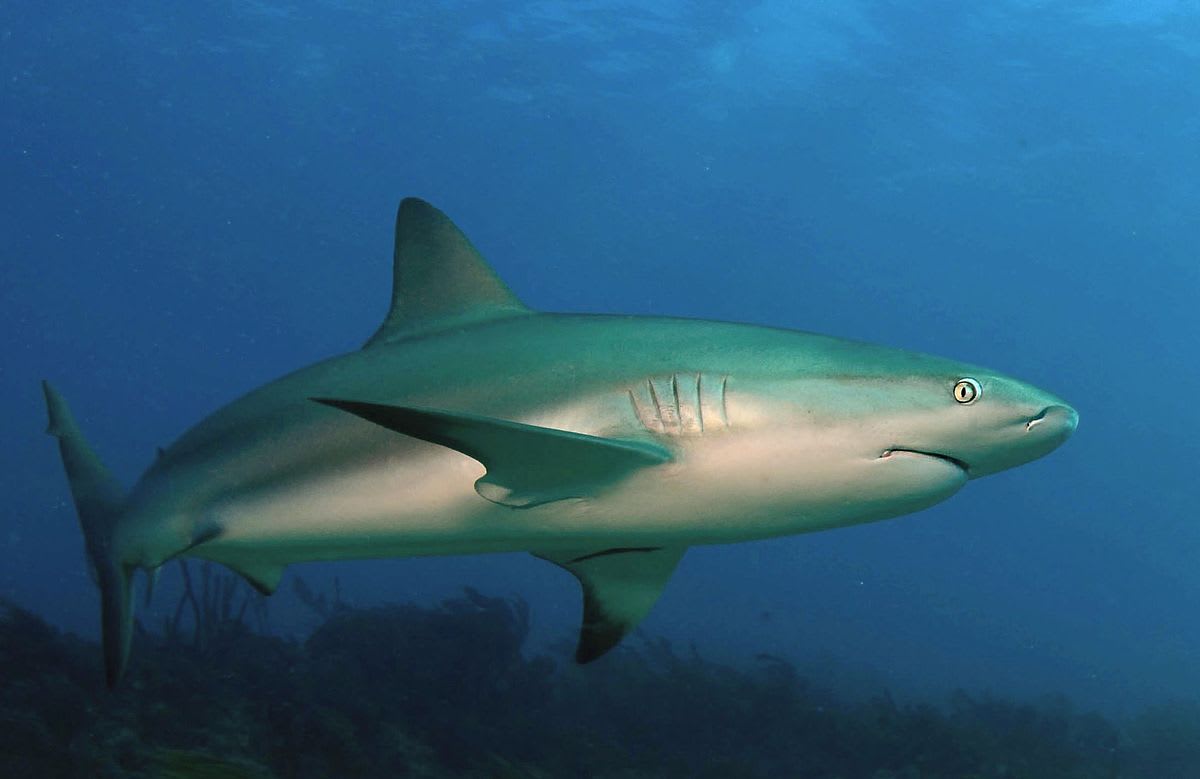
Taxonomy
- Kingdom
- Animalia
- Phylum
- Chordata
- Class
- Chondrichthyes
- Order
- Carcharhiniformes
- Family
- Carcharhinidae
- Genus
- Carcharhinus
- Species
- perezii
Habitat
Caribbean reef sharks primarily inhabit coral reefs, lagoons, and shallow coastal waters in the tropical western Atlantic Ocean. They prefer depths of 10 to 100 feet and are commonly found around islands, continental shelves, and areas with abundant reef structures. This species avoids very deep waters or open ocean environments.
Diet
They feed mainly on bony fishes like snappers, groupers, and mullets, as well as squids and octopuses. Caribbean reef sharks are opportunistic predators that hunt during the day, often ambushing prey in coral reefs or chasing schools of fish. Feeding behavior includes scavenging when opportunities arise.
Behavior
Caribbean reef sharks are typically solitary but may form loose groups around food sources or dive sites. They are diurnal, active during the day and resting in deeper waters at night, often exhibiting curiosity towards divers without being aggressive. They show territorial behavior in feeding areas and can be cautious around larger marine animals.
Fishing
Targeting the Caribbean reef shark as a sport fish requires careful adherence to regulations that protect these Near Threatened species and support conservation efforts funded by angler licenses and taxes, which help maintain healthy shark populations through habitat restoration and research. Use heavy-tackle techniques like trolling with chum trails or drifting live bait to entice these opportunistic predators in their preferred coral reef and lagoon habitats across the tropical western Atlantic, such as Florida, the Bahamas, and Belize, at depths of 10 to 100 feet; focus on areas with abundant reef structures and continental shelves for the best encounters. Recommended tackle includes a stout rod rated for 50-80 pound test line, a high-capacity reel with drag up to 20 pounds, and strong leaders to handle their powerful runs, paired with baits like live mullet, squid, or fish chunks that mimic their natural diet of bony fishes and cephalopods—opt for circle hooks to promote safe catch-and-release. The best season is year-round in warm tropical waters, with peak activity during dawn and dusk when they actively hunt; always check local regulations, such as NOAA's shark fishing rules in the US, which include slot limits, minimum sizes, and mandatory release for certain species as effective tools to sustain populations and reduce bycatch. The IGFA all-tackle record for the Caribbean reef shark stands at 154 pounds, caught off the Florida Keys, underscoring the thrill of sport fishing while highlighting the importance of angler-supported programs that fund marine conservation.
Conservation Status
Listed as Near Threatened by IUCN.