
Overview
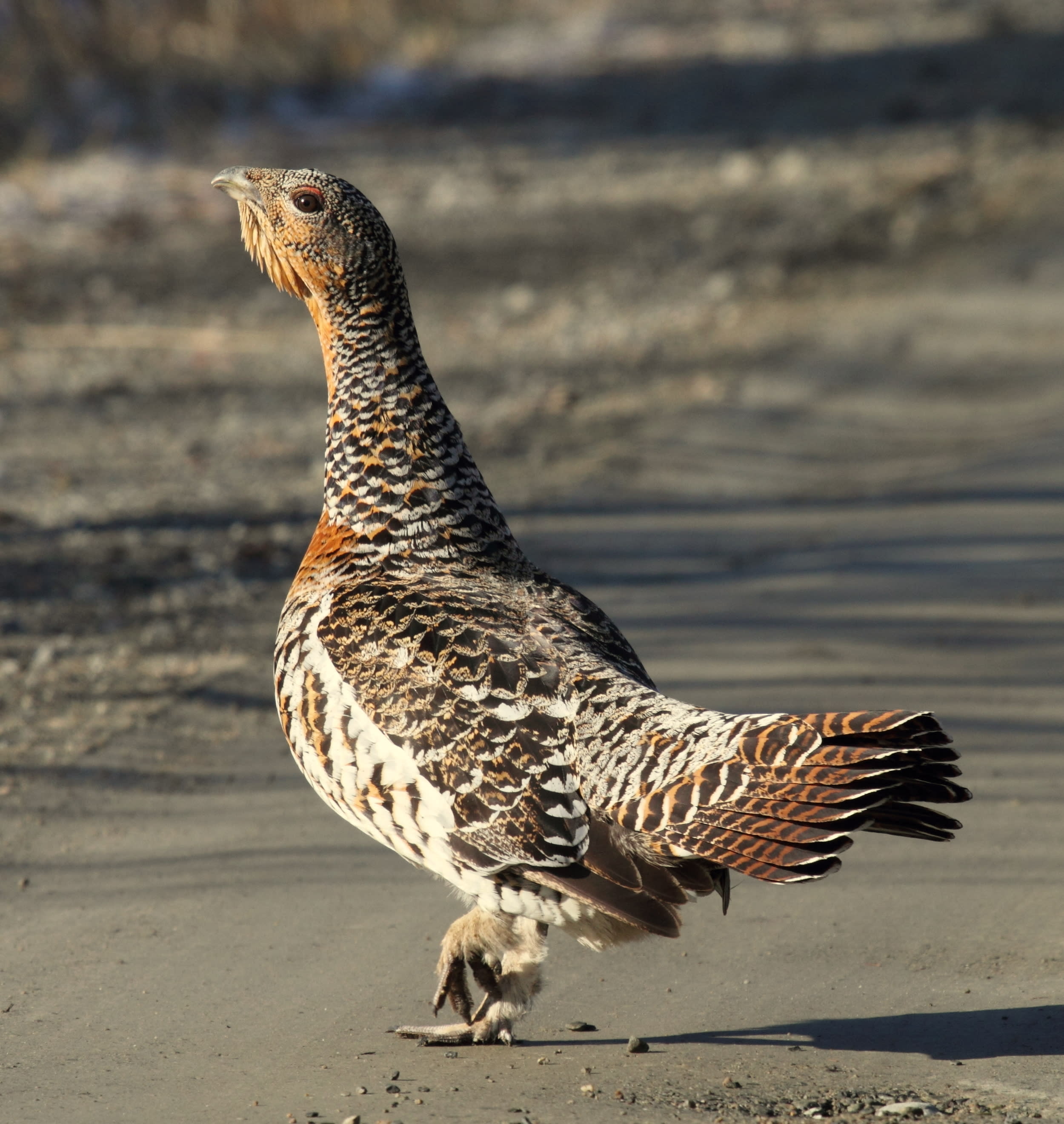
Male and female western capercaillie can easily be differentiated by their size and colouration. The cock is much bigger than the hen. It is one of the most sexually dimorphic in size of living bird species, only exceeded by the larger types of bustards and a select few members of the pheasant family. The body feathers are dark grey to dark brown, while the breast feathers are dark metallic green. The belly and undertail coverts vary from black to white depending on race. Feathers on the upper parts are brown with black and silver barring; on the underside they are more light and buffish yellow. Both sexes have a white spot on the wing bow. They have feathered legs, especially in the cold season, for protection against cold.
Taxonomy
- Kingdom
- Animalia
- Phylum
- Chordata
- Class
- Bird
- Family
- Phasianidae
- Genus
- Tetrao
- Species
- urogallus
Habitat
The capercaillie is a non-migratory sedentary species, breeding across northern parts of Europe and western and central Asia in mature conifer forests with diverse species composition and a relatively open canopy structure.
Diet
They mainly feed on Vaccinium species, especially bilberry.
Behavior
The capercaillie is sexually dimorphic. Females are the sole incubaters and rearers of the offspring.
Hunting
Typically hunted with .22 Hornet, or 3.5 mm.
Conservation Status
Listed as Least Concern by IUCN.