
Overview
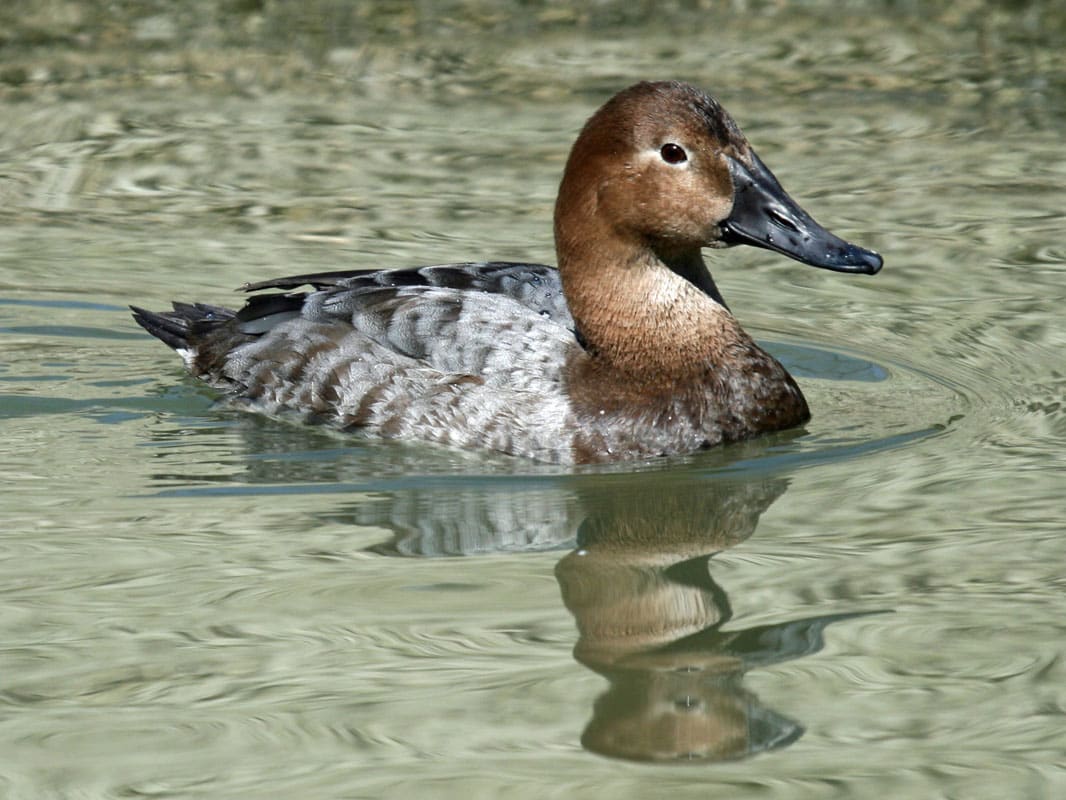
The Canvasback is a large diving duck that can be highly confused by viewers with the Redhead drake. These birds have made a large recovery from where they were a few decades ago. Around the 80’s these migratory birds were listed on special concern list, but due to improved laws and conservation efforts grew back its population by the early 1990’s. The Canvasback is a large bird with an average length ranging around 22 inches and can weigh around 3 lbs.. The drake has reddish colored head, black breast, and a pale white sides and back. The head on the drake has a distinct head that separates it from redheads by having a forehead that slopes down to its black beak. The hen has a pale body color with a long black bill and a sandy brown head. They feed mainly on seeds, buds, roots, snails, and insect larvae.
Taxonomy
- Kingdom
- Animalia
- Phylum
- Chordata
- Class
- Bird
- Family
- Anatidae
- Genus
- Aythya
- Species
- valisineria
Habitat
The Canvasback spends most of its summer in the Prairie Pothole Region where it will spend all summer breeding. During the breeding season the Canvasback will build their nest that has enough buoyancy to float and hold the eggs. Then these birds will spend their winter on the ocean bays or large bodies of water.
Diet
The canvasback feeds mainly by diving, sometimes dabbling, mostly eating seeds, buds, leaves, tubers, roots, snails, and insect larvae. Besides its namesake, wild celery, the canvasback shows a preference for the tubers of sago pondweed, which can make up 100% of its diet at times.The canvasback has large webbed feet adapted for diving and its bill helps it dig tubers from the substrate.
Behavior
The canvasback usually takes a new mate each year, pairing in late winter on ocean bays. It prefers to nest over water on permanent prairie marshes surrounded by emergent vegetation, such as cattails and bulrushes, which provide protective cover. Other important breeding areas are the subarctic river deltas in Saskatchewan and the interior of Alaska. The canvasback migrates through the Mississippi Flyway to wintering grounds in the mid-Atlantic United States and the Lower Mississippi Alluvial Valley (LMAV), or the Pacific Flyway to wintering grounds along the coast of California.
Hunting
Typically hunted with a 12 ga shotgun. Shot size #2-4 is sufficient. Effectively hunted with decoys and calling. Dogs are used for bird retrieval. Steel shot is required for waterfowl in the United States.
Conservation Status
Listed as Least Concern by IUCN.